What is green ammonia?
The energy transition towards a decarbonised model faces a challenge as important as it is complex: finding clean energy carriers capable of replacing fossil fuels in applications where green hydrogen alone presents technical and economic limitations. Long-distance maritime shipping, seasonal power generation, heavy industry and the intercontinental export of renewable energy all need a fuel that is dense, transportable and compatible with existing infrastructure.
The energy transition towards a decarbonised model faces a challenge as important as it is complex: finding clean energy carriers capable of replacing fossil fuels in applications where green hydrogen alone presents technical and economic limitations. Long-distance maritime shipping, seasonal power generation, heavy industry and the intercontinental export of renewable energy all need a fuel that is dense, transportable and compatible with existing infrastructure.
Green ammonia (NH₃) has emerged as one of the most promising answers. Produced from renewable hydrogen and atmospheric nitrogen, it offers an energy density far higher than liquid hydrogen, a global transport and storage network that already exists, and a virtually zero carbon footprint across its entire value chain.
Moving from the lab to the industrial plant, however, demands a robust technical backbone. Tecnium, Spanish manufacturer of corrosion-resistant fluid-handling and gas-treatment equipment since 1957, supplies the critical components for the production, storage and use of green ammonia: fibreglass-reinforced polyester (FRP) tanks, corrosion-resistant plastic pumps in PP, PVDF and PVC, and gas scrubbing and biofiltration systems for NH₃ emissions control.
In this guide we examine what green ammonia is, how it is produced, what applications it has as the fuel of the future and which industrial technologies are essential to make it viable at scale.
What is green ammonia and why is it called the fuel of the future
Ammonia (NH₃) is not a new discovery. Industry has been producing it at scale since 1913, when Fritz Haber and Carl Bosch developed the catalytic process that still dominates the market a century later. What is new is the ability to produce it without emitting CO₂, thanks to the combination of renewable electrolysis with the conventional Haber-Bosch process.
Grey, blue and green ammonia: key differences
Not all ammonia is the same. Industry classifies NH₃ according to its origin, carbon intensity and the technology used to produce it:
- Grey ammonia: the conventional product. Manufactured from hydrogen obtained from natural gas via steam methane reforming (SMR), emitting approximately 1.6-1.8 tonnes of CO₂ per tonne of NH₃. It accounts for more than 90 % of global ammonia today.
- Blue ammonia: same technology as grey ammonia, but with carbon capture and storage (CCS). It reduces the carbon footprint by 60-90 %, although it depends on suitable nearby geological reservoirs for CO₂ injection.
- Green ammonia: produced entirely from renewable hydrogen (water electrolysis with solar, wind or hydro electricity) and atmospheric nitrogen. Its carbon footprint is virtually nil, limited only to the materials used to build the plant. It is the only option fully compatible with the EU’s 2050 climate neutrality targets.
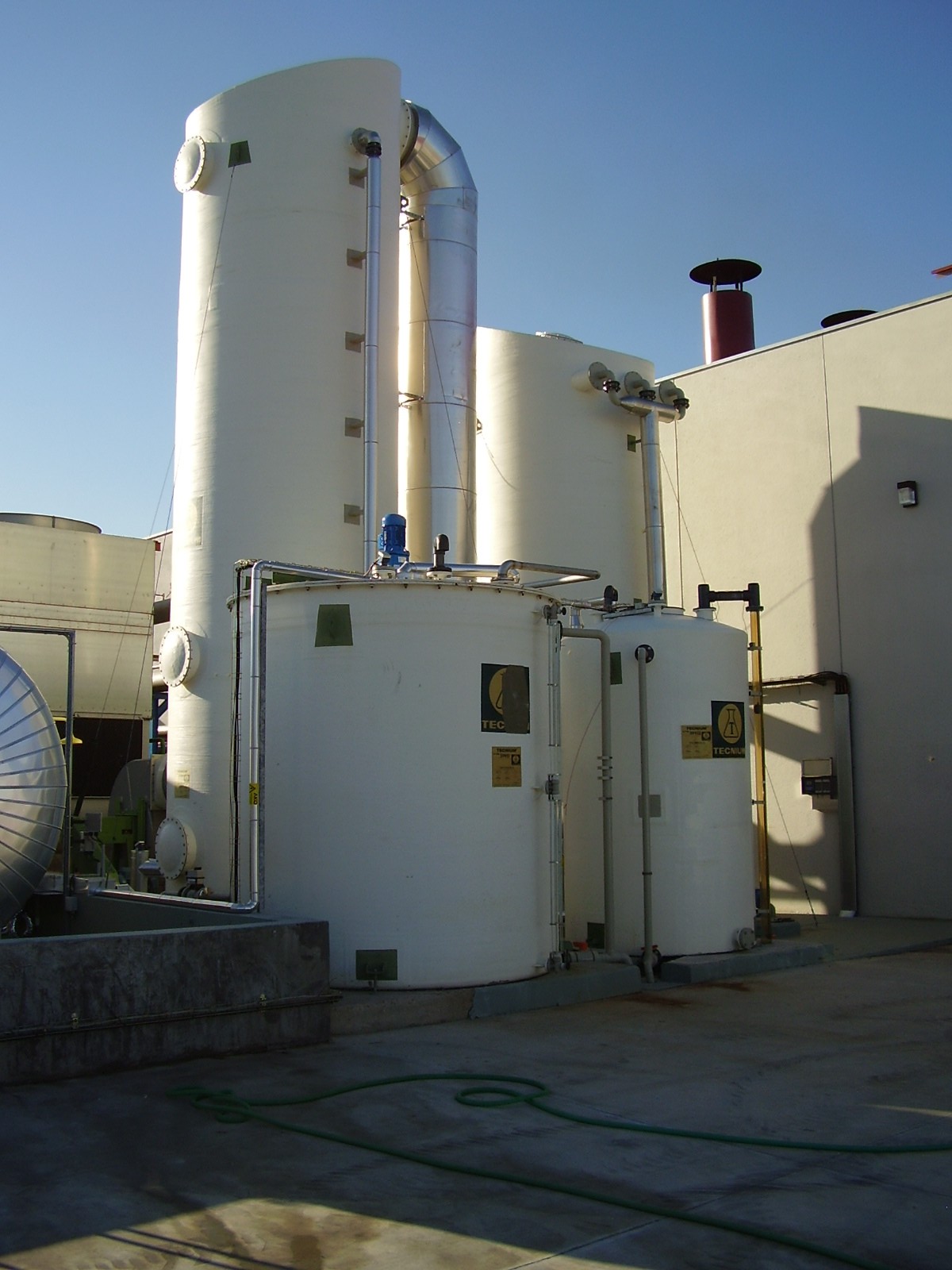
Producing green ammonia: from water to fuel
Green ammonia production combines three mature technologies integrated in a novel way:
- Water electrolysis: PEM, alkaline or solid-oxide electrolysers split H₂O into hydrogen and oxygen using 100 % renewable electricity. Feed-water purity is critical — typically the process starts with demineralised or desalinated water of very high quality.
- Air separation: an ASU (Air Separation Unit) extracts pure nitrogen from the air through cryogenic distillation or selective membranes.
- Haber-Bosch synthesis: hydrogen and nitrogen react at pressures of 150-300 bar and temperatures of 400-500 °C over an iron catalyst, producing liquid ammonia ready for storage.
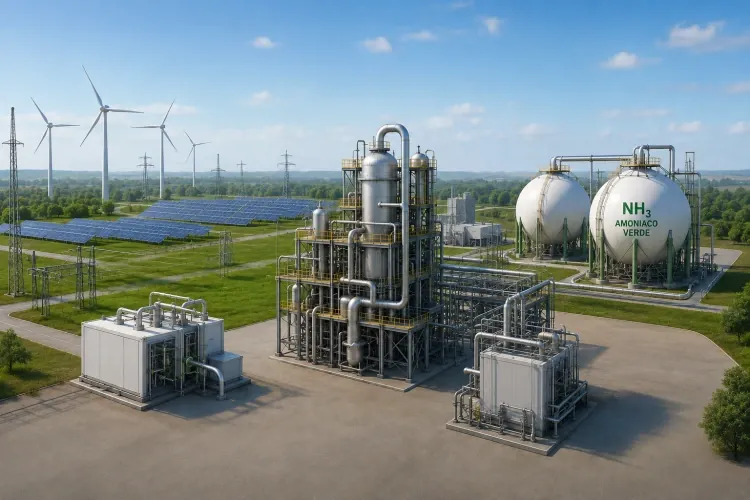
Green ammonia plants are installations covering several hundred hectares that combine photovoltaic or wind farms, desalination units (when sited on the coast), electrolysers, ASUs and Haber-Bosch reactors. Every subsystem requires dedicated pumping, storage and fluid-treatment equipment, much of which operates under corrosive conditions that demand advanced corrosion-resistant materials.
Applications of green ammonia as a fuel and energy carrier
Green ammonia is set to play a key role in four major markets:
- Marine fuel: the International Maritime Organization (IMO) is targeting a 50 % cut in shipping GHG emissions by 2050. Large dual-fuel engines running on fuel oil + ammonia are already being trialled, with Maersk, Yara, MAN and Wärtsilä leading commercial projects.
- Intercontinental hydrogen carrier: transporting H₂ from producing regions (Australia, Chile, Morocco, the Middle East) to consumers (Europe, Japan, Korea) in the form of ammonia is cheaper than as liquid hydrogen. Once delivered, NH₃ can be cracked back to H₂ or used directly.
- Co-firing in thermal power stations: Japan and South Korea are retrofitting coal-fired plants to co-fire green ammonia as a progressive decarbonisation measure.
- Decarbonised fertiliser industry: ammonia’s historic uses — production of urea, nitrates, ammonium sulphate — continue, but with a carbon balance radically different from today’s.
Technical challenges of handling green ammonia at industrial scale
Unlike hydrogen, ammonia is a compound that industry has known how to handle for more than a century. Even so, its corrosivity, toxicity and hazardous nature demand specific equipment at every stage of the chain. This is precisely where Tecnium solutions come into play.
Properties of ammonia and challenges for industrial equipment
Ammonia, whether anhydrous (NH₃) or in aqueous solution (NH₄OH), has several characteristics that shape the design of industrial equipment:
- High toxicity: the TLV-TWA limit is 25 ppm and the IDLH is 300 ppm. Any leak poses an immediate risk to operators and the surrounding environment.
- Selective corrosivity: it attacks copper and its alloys, zinc and most galvanised steels. In the presence of moisture it can also attack carbon steel.
- Moderate flammability: the explosive limits of NH₃ are between 15 % and 28 % in air, with a high ignition energy. It is not as dangerous as hydrogen, but it does require ATEX classification in many zones.
- Penetrating odour: detectable from 5 ppm, well below the toxic threshold — a natural early-warning signal, but also a reason to control fugitive emissions to avoid nuisance to surrounding communities.
These properties impose demanding requirements on equipment in contact with ammonia: compatible materials, absolute leak-tightness, redundant seals and dedicated vent capture and treatment systems. Advanced thermoplastic materials — PP, PE, PVDF, PVC and FRP — and special alloys (Hastelloy, titanium) are today’s reference choices.
Green ammonia storage: FRP tanks and technical solutions
Ammonia is stored in two main forms: anhydrous at low temperature or under pressure, or diluted in water as an aqueous solution (ammonium hydroxide). Green ammonia plants combine both approaches depending on the process stage:
- Cryogenic anhydrous NH₃ storage: carried out at -33 °C in large spheres or insulated tanks made of dedicated steels. For this use the material of choice is not FRP but cryogenic steels and alloys.
- Aqueous-solution storage: widely used in chemical reagent farms, SCR DeNOx dosing systems, fertiliser plants and water-treatment installations. Here FRP tanks are the most widespread solution: they combine excellent chemical resistance with large capacities and minimal maintenance costs.
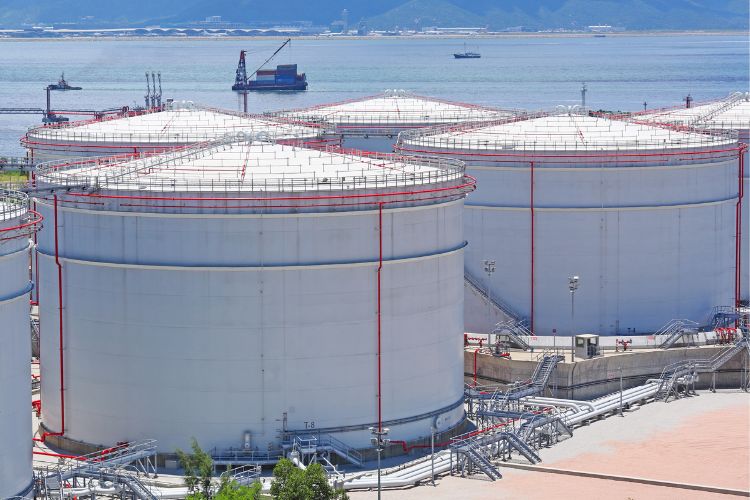
Tecnium manufactures FRP and thermoplastic tanks for ammonia solutions in standard capacities from 500 to 200,000 litres, in vertical (DPO, DPT), horizontal (DCS, DCH) and custom-engineered configurations. Tanks are designed and calculated to EN 13121, BS 4994, ASME RTP-1, ASTM D3299 and AD Merkblatt standards, and include insulation and temperature-maintenance systems such as electrical heat tracing, immersion heaters or internal coils.
Pumping and transfer: corrosion-resistant pumps for ammonia
Transferring ammonia solutions inside a plant is a critical operation. Conventional steel or cast-iron pumps suffer corrosion and leaks within short timeframes. Solid-block thermoplastic pumps, by contrast, offer total chemical resistance and a multi-year service life.
The Tecnium range of corrosion-resistant plastic pumps includes several series adapted to handling NH₃ and ammoniacal solutions:
- BN series (ISO 2858): horizontal process pump, flows up to 1,500 m³/h and heads up to 120 m. Materials: PP, PVDF, PVC, PE, E-CTFE. The standard choice for transfer and dosing in reagent farms.
- BKM magnetic-drive series: absolute leak-tightness, no mechanical seal. Particularly recommended for anhydrous ammonia or concentrated solutions in ATEX zones, where any leak is unacceptable.
- BT vertical submerged series: ideal for suction from retention pits or storage tanks without the need for priming.
PP and PVDF show full chemical compatibility with aqueous ammonia at typical process temperatures (up to 90 °C for PP, 120 °C for PVDF), and the absence of galvanic pairs eliminates the electrochemical corrosion that steel suffers in these services.
Emissions control, value chain and frequently asked questions
Every green ammonia plant — and every industrial process that uses NH₃ — generates fugitive and point-source emissions that must be treated before being released to the atmosphere. This is where Tecnium’s gas scrubbing and biofiltration technologies come in.
NH₃ emissions treatment: scrubbers and biofiltration
Ammonia is highly soluble in water, which makes it straightforward to capture and treat. The most widely used technologies are:
- Acid scrubber: NH₃ is absorbed into an aqueous solution of sulphuric, phosphoric or other acids, forming ammonium sulphate or phosphate that can be valorised as fertiliser. The most common option for medium-to-high concentrations.
- Scrubber + biofilter combination: in plants with concentration peaks, combining an initial acid scrubbing stage with a polishing biofilter delivers an overall 99 % efficiency and emissions well below the limit values set by Directive 2010/75/EU (IED) and the sector BREFs.
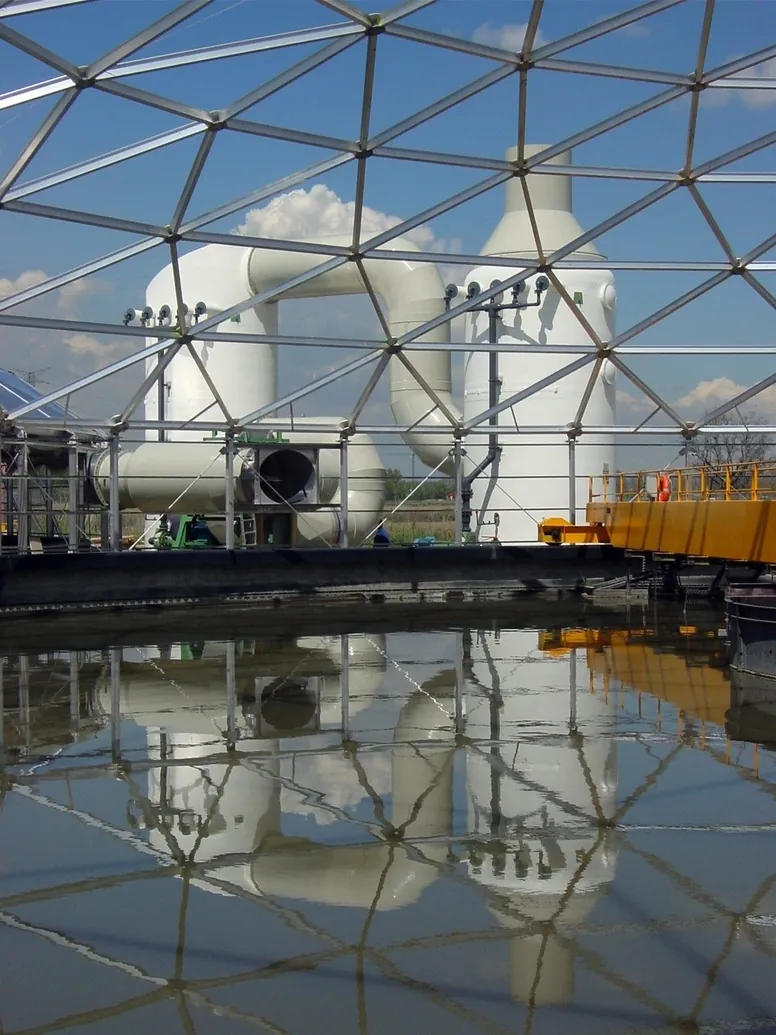
Tecnium designs, manufactures and installs complete turnkey systems: FRP scrubbers, modular biofilters in stackable containers, corrosion-resistant fans and all the related accessories. Its track record includes fertiliser plants, WWTPs, slurry-treatment plants and thermal power stations.
Tecnium in the green ammonia value chain
A fully integrated green ammonia plant combines dozens of technical subsystems. Tecnium provides dedicated solutions for several of them:
- Feed-water treatment: desalination and demineralisation for electrolysis. Tecnium supplies corrosion-resistant pumps and FRP tanks for reagent farms in potable-water and desalination plants.
- Storage of reagents and ammonia solutions: FRP and thermoplastic tanks for diluted ammonia, caustic soda, sulphuric acid and other auxiliary process chemicals.
- Pumping and dosing: solid-block thermoplastic pumps (PP, PVDF, PVC) for transfer and dosing of NH₃ and its by-products at every stage of the plant.
- Gas emissions treatment: acid scrubbers, biofilters, biotrickling filters and corrosion-resistant fans to capture and neutralise atmospheric NH₃.
- Integrated fertiliser plants: the fertiliser sector — one of the main destinations for green ammonia — is a historic area of Tecnium references, with installations for international clients and engineering firms such as Foster, Técnicas Reunidas, Ondeo Degremont, Lurgi and Toyo.
Frequently asked questions about green ammonia
Green ammonia is NH₃ produced from renewable hydrogen (obtained by electrolysis of water using solar, wind or hydro electricity) and atmospheric nitrogen, via the Haber-Bosch process. Its carbon footprint is virtually nil, compared with the 1.6-1.8 tonnes of CO₂ per tonne emitted by conventional (“grey”) ammonia produced from natural gas.
For three reasons: high volumetric energy density (five times higher than liquid H₂), a global logistics infrastructure already in place (the ammonia industry moves more than 180 million tonnes per year) and a net-zero carbon balance when produced from renewables. It is emerging as a fuel for maritime transport, a hydrogen export carrier and an additive in thermal power generation.
Advanced thermoplastic materials — polypropylene (PP), PVDF, PVC and fibreglass-reinforced polyester (FRP) — show excellent resistance to ammonia in aqueous solution. For anhydrous low-temperature ammonia, dedicated cryogenic steels and alloys are used. Copper and its alloys must be avoided altogether, as must zinc and galvanised steel, which are rapidly attacked by NH₃.
At industrial scale ammonia is stored in two ways: anhydrous at -33 °C in cryogenic tanks (spheres and double-wall vessels) or pressurised at ambient temperature. Aqueous solutions are stored in vertical or horizontal FRP tanks of up to 200,000 litres, fitted with vents, acid scrubbers, level indicators and retention bunds in line with the applicable storage regulations.
Ammonia emissions are controlled with three main technologies: acid scrubbers (absorption into sulphuric or phosphoric acid, generating a valorisable fertiliser), biofilters and biotrickling filters (biological degradation of NH₃ to nitrates) and multi-stage combinations that deliver 99 % efficiency and compliance with Directive IED 2010/75/EU. Tecnium designs and manufactures all this equipment in FRP and corrosion-resistant thermoplastics.
Tecnium supplies the critical equipment for handling corrosive fluids and treating gases within a green NH₃ plant: corrosion-resistant pumps for transfer and dosing, FRP tanks for reagent and solution storage, scrubbers and biofilters for emissions control, and fans and ducting for capture systems. Its experience since 1957 across chemical, fertiliser and water-treatment industries makes Tecnium a trusted technical partner for integrators and engineering firms designing green ammonia projects.
If your project involves the handling, storage or treatment of green ammonia emissions, the Tecnium technical team can help you define the best solution for each subsystem: pumps, tanks, gas scrubbing or biofiltration. Request a no-obligation quotation and receive personalised advice from a manufacturer with more than 70 years of experience in pumping corrosive fluids and treating industrial gases.
How can we help you?
Tell us about your application and we will advise you the most optimal solution to solve your needs of gas treatment, odor control and storage and pumping of corrosive fluids.