
APQ-6 Installation
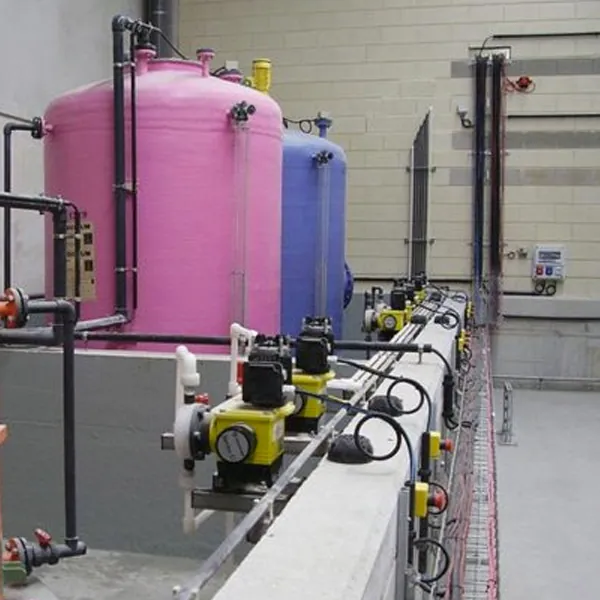
TECNIUM places its full technical team and service personnel at your disposal for the design, execution and licensing of complete turnkey installations: storage, transfer, tanker truck offloading, dosing and process, including safety elements (level indicators, valves, etc.), vent treatment, walkways and structures, technical documentation and drawings, and licensing under APQ-6, IPPC and related regulations.
What is the ITC MIE APQ-6?
The ITC MIE APQ-6 is the Spanish Supplementary Technical Instruction of the Regulation for the Storage of Chemical Products (Royal Decree 656/2017) that governs the storage of corrosive liquids in fixed containers, both above-ground and underground, at industrial installations.
It covers requirements for design, safety distances, retention bunds, identification, detection and warning systems, ventilation, fire protection, maintenance and mandatory periodic inspections.
Furthermore, large installations may require Integrated Environmental Authorisation (IPPC), environmental impact assessment, SEVESO certification where applicable, and compliance with occupational safety and prevention regulations.
Turnkey: design, manufacturing, installation and licensing
TECNIUM covers the full chain, from initial sizing to handover of the licensed file to the administration.
Storage
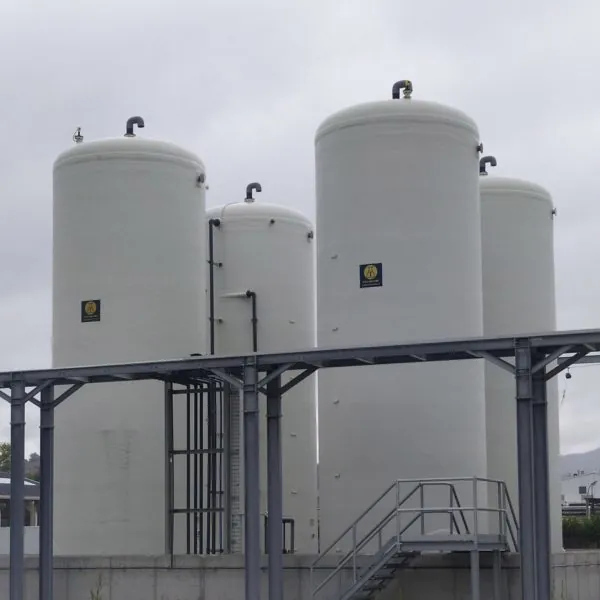
Tanks in FRP, PP, PVDF or PE, retention bunds, venting systems and filters.
Transfer
Anticorrosive pumps, valves, piping and hoses in materials compatible with the chemical.
Tanker truck offloading
Offloading area with quick connections, anti-overflow system and pollution prevention.
Dosing
Dosing skid with metering pumps, regulating valves and automatic control.
Process
Process lines integrated with the rest of the plant and its auxiliary circuits.
Safety and instrumentation
Level sensors, instrumentation, safety valves, alarms and connection to the customer's SCADA/PLC.
Vents and emissions
Vapour treatment with scrubbers, activated carbon filters or biofilters depending on the pollutant.
Walkways and structures
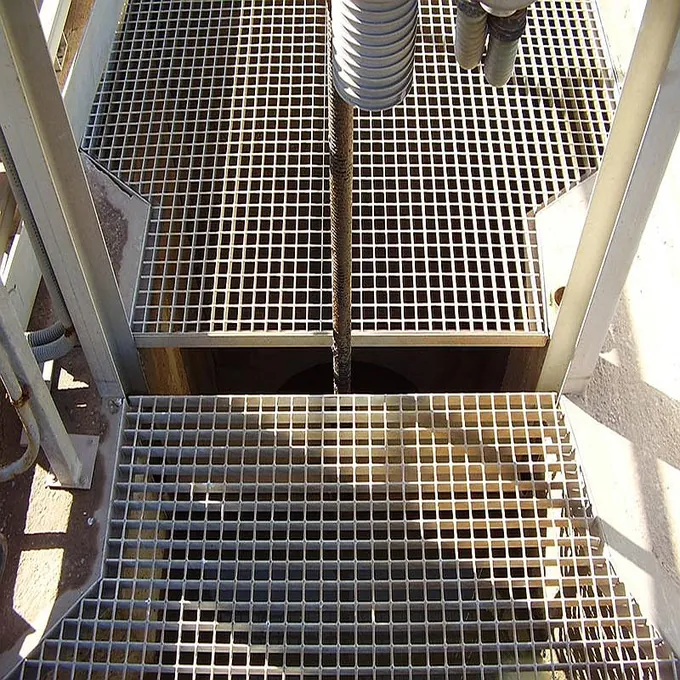
Stairs, railings, platforms and supports in FRP or anticorrosion-painted steel.
Documentation and licensing
Technical report, drawings, supporting calculations, declaration of conformity and APQ-6 / IPPC processing.
The APQ-6 project step by step
A single technical team accompanies the customer from the first visit through to commissioning and final licensing.
Site visit and data collection
Analysis of the chemical to be stored, flow rates, volumes, site layout, existing connections and customer requirements.
Preliminary project and basic engineering
Sizing of tanks, retention bunds and lines. Material selection based on chemical compatibility. Cost estimate and project plan.
APQ-6 technical report
Drafting of the descriptive report, supporting calculations, detail drawings and documentation required by ITC MIE APQ-6 and IPPC where applicable.
Workshop manufacturing
Manufacturing of tanks, valves and skids at the TECNIUM plant (Manresa). Workshop testing prior to dispatch to site.
Site assembly
Turnkey installation: bunds, tanks, piping, pumps, instrumentation, walkways and electrical and control connections.
Commissioning and licensing
Acceptance testing in the presence of the customer, personnel training, handover of manuals and certificates, and final processing with the administration through to APQ-6 sealing.
After-sales service
Scheduled maintenance, stocked spare parts and mandatory periodic inspections to maintain APQ-6 compliance over time.
Advantages of the turnkey service
A single point of accountability
- Design, manufacturing, assembly and licensing with one supplier
- Single point of coordination across engineering, workshop, site and authorities
- Full responsibility for the final outcome
Complete documentation
- APQ-6 and IPPC reports signed by a qualified technician
- Drawings, isometrics and operating manuals
- Certificates, declarations of conformity and maintenance log
Regulations covered
- ITC MIE APQ-6 (RD 656/2017) — corrosive liquid storage
- IPPC — Integrated Environmental Authorisation
- Machinery Directive, ATEX and SEVESO as applicable
FAQs on APQ-6 installations
The most common questions about chemical storage licensing, materials and timelines.
Which chemicals does APQ-6 cover?
The ITC MIE APQ-6 governs the storage of corrosive liquids in fixed containers, both above-ground and underground. It covers acids (HCl, H₂SO₄, HF, HNO₃…), bases (NaOH, KOH), hypochlorites, brines and other products classified as corrosive under categories H314/H318 of the CLP. Other APQs cover different liquids: APQ-1 for flammables and combustibles, APQ-2 for ethylene oxide, etc.
Does every chemical tank require licensing?
No. The obligation to process APQ-6 depends on the total volume stored and the hazard level of the product. Above the thresholds set in the ITC, a project, technical management and notification or authorisation by the regional administration are required. TECNIUM evaluates case by case whether an installation falls inside or outside the licensing obligation.
How long does APQ-6 licensing take?
It depends on the size of the installation and the autonomous community. A medium tank farm (3-6 tanks with bunds and transfer) typically runs to 3-6 months from project signature to full licensing: 4-8 weeks of workshop manufacturing, 2-4 weeks of site assembly, and the rest is administrative time for processing, inspection and sealing by a notified body.
What periodic inspections does APQ-6 require?
The ITC requires periodic inspections of tanks, bunds, piping and safety elements by Authorised Inspection Bodies (OCA). Typical intervals range from 5 to 10 years depending on the type of container and material. TECNIUM provides an after-sales service with a preventive maintenance calendar and support during inspections to ensure continued compliance.
Can vent treatment be integrated?
Yes. When tanks store chemicals with corrosive or odorous vapours (HCl, H₂S, NH₃, mercaptans…), the vent is routed to a treatment unit. TECNIUM designs the complete line by integrating APQ-6 tanks with chemical scrubbers, biotrickling, biofilters or activated carbon from the Gas Treatment category, ensuring the assembly meets emission and IPPC obligations.
Can existing installations be retrofitted to APQ-6?
Yes. It is a common situation: an older installation that no longer meets the new requirements after a modification or an unfavourable inspection. TECNIUM carries out the diagnosis, proposes improvements (additional bund, updated valves, instrumentation, vents to scrubber, etc.) and delivers the modified project with the corresponding licensing.
Send us your details and we will advise you
Discuss with our technical team the feasibility of your turnkey chemical storage installation under APQ-6 and IPPC.
- Site visit and preliminary project at no commitment
- APQ-6 report signed by a qualified technician
- Integrated manufacturing, assembly and licensing
- After-sales service and scheduled maintenance
Request information
Complete the form and our technical team will contact you.
Need to license your chemical storage?
Let us talk with no commitment. Our technical team will assess the feasibility and timeline of your APQ-6 project.