Complete guide: hydrochloric acid pumps
Hydrochloric acid (HCl) ranks among the most widely handled chemicals across British industry — from pharmaceutical manufacturing and water treatment to steel pickling and North Sea decommissioning. It is also one of the most destructive substances that a pumping system can encounter. Chloride ions attack stainless steel, compromise mechanical seals and corrode conventional metallic components far faster than most process engineers expect.
Hydrochloric acid (HCl) ranks among the most widely handled chemicals across British industry — from pharmaceutical manufacturing and water treatment to steel pickling and North Sea decommissioning. It is also one of the most destructive substances that a pumping system can encounter. Chloride ions attack stainless steel, compromise mechanical seals and corrode conventional metallic components far faster than most process engineers expect.
For any UK facility operating under COSHH, DSEAR and HSE regulations, selecting the right pump for hydrochloric acid is not merely an engineering decision: it is a compliance obligation. A single seal failure can trigger reportable RIDDOR incidents, COSHH exposure breaches and unplanned shutdowns that cost thousands of pounds per hour.
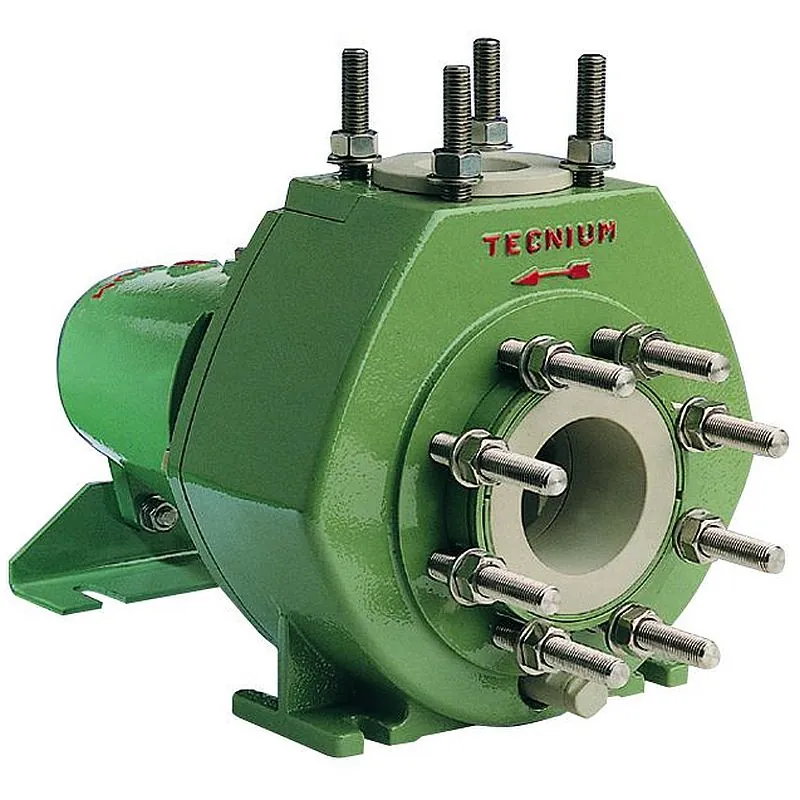
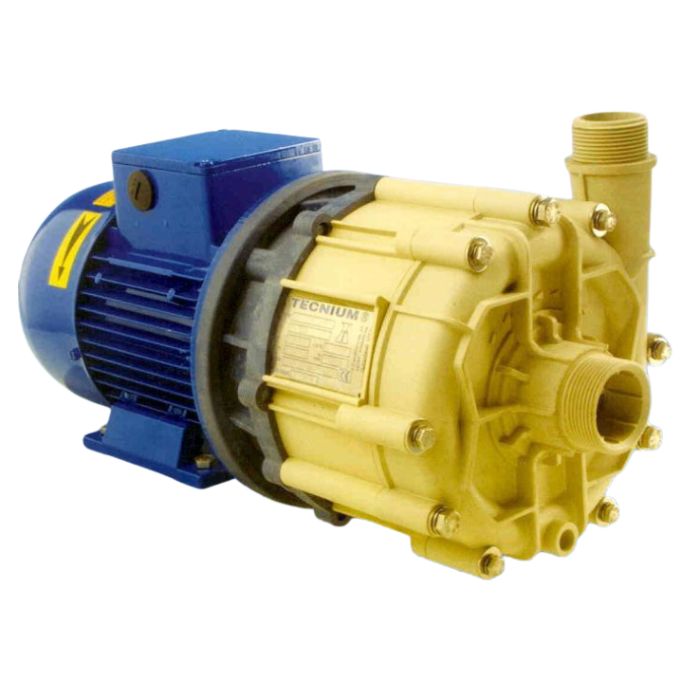
Tecnium has been designing and manufacturing corrosion-resistant plastic pumps since 1957. Our centrifugal pumps — horizontal, vertical and magnetic drive — are built entirely from solid engineering thermoplastics (PVDF, PP, PVC, PE, E-CTFE, PTFE) and handle HCl at concentrations up to 37% and temperatures up to 120 °C. Throughout this guide we explain why HCl demands specialist equipment, which materials and pump configurations deliver the longest service life, and what technical criteria a process engineer should evaluate before specifying this critical asset.
Why hydrochloric acid is so challenging for pumping equipment
Chemical behaviour of HCl and why it destroys conventional pumps
Hydrochloric acid is a strong, fully dissociated acid that releases highly reactive chloride ions (Cl⁻) into solution. Commercial grades typically range from 28% to 37% w/w, and even dilute solutions are aggressively corrosive to most metals.
Carbon steel corrodes rapidly on contact. More critically, chloride ions penetrate the passive oxide layer of stainless steel — including grades 304, 316 and duplex alloys — causing pitting corrosion and stress corrosion cracking. These failure modes are particularly dangerous because they often progress without visible external signs until the component fails catastrophically.
Above 30% concentration, HCl releases toxic, highly irritating fumes at ambient temperature. Under the UK’s COSHH framework, the workplace exposure limit (WEL) for hydrogen chloride is just 5 ppm over 15 minutes. This means that even a minor seal weep can push a facility into non-compliance, triggering HSE enforcement action and potential prosecution under the Health and Safety at Work Act 1974.
Key UK industries that rely on hydrochloric acid
The United Kingdom’s industrial landscape creates specific demand patterns for HCl pumping equipment. Each sector operates under different flow rates, concentrations and regulatory pressures, which directly influence pump specification, material selection and compliance documentation:
- Pharmaceutical manufacturing: the UK’s £21 billion pharma sector uses HCl extensively for pH adjustment in tablet formulations, injectable solutions and ophthalmic products. Pumps must meet stringent cleanliness standards and operate reliably in GMP-controlled environments.
- Water treatment: acid dosing for pH correction in municipal and industrial water systems across England, Scotland and Wales. Utilities require pumps that deliver precise, low-pulsation flow with zero leakage into potable water lines.
- Steel and metal finishing: pickling lines, galvanising baths, anodising and degreasing processes. HCl concentrations in these applications frequently reach 33–37%, often at elevated temperatures up to 60–80 °C.
- Oil and gas decommissioning: a growing sector in the North Sea, where HCl is used for pipeline cleaning, scale removal and corrosion control during platform dismantling. Pumps face demanding offshore conditions and strict DSEAR zoning requirements.
- Chemical processing: synthesis of organic and inorganic compounds, production of ferric chloride (FeCl₃), aluminium chloride and neutralisation of alkaline waste streams.
- Food and beverage: equipment sanitisation, gelatine production, starch processing and pH regulation under BRC and HACCP frameworks.
The real cost of specifying the wrong pump for HCl
Choosing a pump that is not engineered for hydrochloric acid service creates a chain of operational, financial and regulatory consequences that extend well beyond a simple maintenance issue:
- HSE enforcement and RIDDOR reporting: any uncontrolled release of HCl vapour or liquid is a reportable dangerous occurrence under RIDDOR 2013. Repeated incidents attract HSE scrutiny, improvement notices and, in serious cases, prosecution. For COMAH upper-tier sites handling significant HCl inventories, the consequences escalate further.
- Unplanned downtime: a pump failure on a pickling line or a water treatment dosing system halts production immediately. In the UK’s pharmaceutical sector, where batch integrity is paramount, a single interruption can invalidate an entire production run worth tens of thousands of pounds.
- Spiralling maintenance costs: replacing mechanical seals every few weeks, repairing corroded pump casings and scheduling emergency shutdowns multiplies the total cost of ownership (TCO) dramatically. A correctly specified plastic pump in PVDF or PP, with the right seal configuration, can operate for years with minimal intervention — reducing TCO by an order of magnitude compared with metallic alternatives.
How to select the right pump for hydrochloric acid service
Construction materials rated for HCl: PVDF, PP, E-CTFE, PE and PTFE
The critical factor in HCl pump longevity is the wetted material — the substance from which the casing, impeller, shaft sleeve and seals are made. Unlike metallic pumps that rely on passive oxide films (which chloride ions destroy), Tecnium pumps are machined from solid engineering thermoplastics that are inherently inert to hydrochloric acid. The table below summarises the key properties of each material:
| Material | Max. continuous temp. | HCl resistance | Key characteristics |
|---|---|---|---|
| PVDF | 100 °C (248 °F) | Excellent to 37% | Outstanding mechanical strength and abrasion resistance. Withstands virtually all inorganic acids and alkalis. The benchmark material for HCl duty. |
| PP | 40 °C (194 °F) | Excellent to 37% | Excellent thermal and chemical stability. Resistant to acid and saline solutions. Cost-effective choice for moderate temperatures. |
| E-CTFE | 100 °C (302 °F) | Excellent to 37% | Weldable fluoropolymer with maximum chemical resistance to acids, salts and alkalis, both organic and inorganic. |
| PE | 40 °C (176 °F) | Good to 37% | Similar chemical structure to PP with superior abrasion resistance. Suitable for dilute HCl at ambient temperature. |
| PTFE | 120 °C (392 °F) | Excellent to 37% | Near-universal chemical resistance. Primarily used for seals, gaskets and mechanical seal faces in high-demand applications. |
| PVC | 50 °C (122 °F) | Excellent up to 37% | Excellent performance against 37% HCl. Withstands up to 10 °C more than PP and PE, broadening the application range to moderate temperatures. A differentiating material rarely offered by corrosion-resistant pump manufacturers on the market. |
For the vast majority of HCl applications in UK industry, PVDF is the material of choice: it combines excellent chemical resistance across the full commercial concentration range with a 100 °C service temperature, superior mechanical rigidity and outstanding abrasion resistance. Where process temperatures remain below 60 °C, polypropylene (PP) delivers equivalent chemical performance at a lower capital cost.
Tecnium pump ranges for hydrochloric acid: technical comparison
Tecnium manufactures a comprehensive range of plastic centrifugal pumps purpose-built for aggressive chemical duty. Each series addresses a distinct operational requirement. The following table provides a side-by-side comparison to support initial pump selection:
| Series | Configuration | Max. flow | Max. head | Typical HCl application |
|---|---|---|---|---|
| BN | Horizontal process pump (ISO 2858) | 1,500 m³/h | 120 m | High-capacity transfer and process duty in chemical plants, water treatment works and steel pickling lines. |
| BH / BX | Close-coupled horizontal motor pump | 250 m³/h | 80 m | Dosing, recirculation and transfer in medium-scale plants. Compact footprint for constrained installations. |
| BT | Vertical cantilever sump pump | 450 m³/h | 100 m | Pumping from pits, bunds and tanks. Cantilever shaft with no submerged bearing — ideal for HCl containing solids. |
| BV | Vertical tank-mounted pump | 1,200 m³/h | 100 m | Mounted directly on storage tanks. Hydrodynamic sealing eliminates mechanical seal entirely. |
| BKM | Magnetic drive (sealless) | 50 m³/h | 45 m | Zero-emission duty. Essential for DSEAR-zoned areas, pharmaceutical clean rooms and high-purity HCl transfer. |
The BN series is Tecnium’s workhorse process pump: fully compliant with ISO 2858 / EN 22858, it accepts any commercially available mechanical seal and is manufactured in six different thermoplastics. Where absolute containment is required — such as DSEAR Zone 1 or 2 areas, pharmaceutical facilities or semiconductor fabs — the BKM magnetic drive series eliminates the mechanical seal entirely. Torque is transmitted via a magnetic coupling, guaranteeing zero fugitive emissions to atmosphere.
The vertical BT and BV series solve applications where the pump must draw directly from a storage vessel, bund or sump. The BT’s cantilever shaft design eliminates the need for a submerged guide bearing, making it the preferred choice for HCl laden with suspended solids — such as pickling line effluent or acid mine drainage — where a conventional bearing would suffer rapid erosion.
Specification criteria: flow rate, concentration, temperature and seal type
Correctly sizing a hydrochloric acid pump requires the simultaneous evaluation of several process parameters. An error in any one of them can result in an oversized pump (higher capital and energy cost), an undersized pump (unable to meet duty conditions) or incompatible materials:
- Required flow rate (Q): determines pump size. Tecnium’s selection charts cover duties from 1 m³/h (BKM for metering and dosing) up to 1,500 m³/h (BN for large-scale process transfer). The operating point should sit within the best efficiency region of the curve.
- Total dynamic head (H): comprises static lift plus system friction losses. The BN series delivers up to 120 m and the BT series up to 100 m of head.
- HCl concentration: commercial grades range from 10% to 37% w/w. All Tecnium wetted materials (PVDF, PP, PE, E-CTFE) resist the full range, although maximum service temperature decreases as concentration rises.
- Process temperature: the single most important factor in material selection. PP operates safely to 90 °C, PVDF to 120 °C and E-CTFE to 150 °C. Always verify the combined effect of concentration and temperature against the manufacturer’s resistance chart.
- Solids content: if the HCl stream carries particles (pickling scale, precipitates, mineral fines), the BT vertical cantilever pump with no submerged bearing is the preferred configuration. For clean liquids, a standard mechanical seal provides excellent containment.
- Mechanical seal arrangement: Tecnium offers four configurations — SF (single external with PTFE bellows), DE (double external), IP (internal with silicon carbide faces) and IF (internal with PTFE bellows). Selection depends on solids content, system pressure and whether external flushing is available.
Compliance, maintenance and frequently asked questions
Maintenance best practice and expected service life
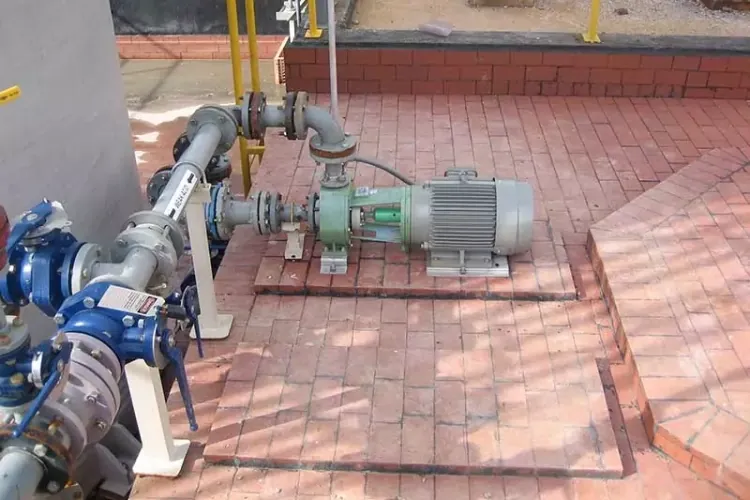
Tecnium pumps are engineered for minimal maintenance, even under the harshest chemical duty conditions. The mechanical design allows complete separation of the pump casing, impeller, shaft and mechanical seal without disconnecting suction or discharge pipework and without disturbing the electric motor. This dramatically reduces intervention time on site — a critical advantage when every hour of downtime carries significant cost.
To maximise service life when handling hydrochloric acid, we recommend the following practices:
- Inspect the mechanical seal regularly: visual checks for weeping or vapour release should be part of the routine COSHH monitoring programme. In high-temperature concentrated HCl service, the seal is the component subjected to the greatest wear.
- Verify pump alignment: BN series pumps with flexible coupling and baseplate should be checked after commissioning and after every major maintenance event.
- Monitor process temperature: operating above the material’s rated temperature accelerates polymer degradation. Fitting a temperature sensor on the suction line provides early warning and supports your COSHH risk assessment.
- Hold critical spares on site: keeping at least one complete mechanical seal kit and a gasket set in stores avoids extended shutdowns. Tecnium maintains parts stock for rapid dispatch to UK customers.
With correct material specification and a preventive maintenance regime, a Tecnium plastic pump operating on HCl duty can achieve a service life in excess of 10 years — compared with the 6–18 months typically achieved by conventional metallic pumps under the same conditions. Over a 10-year horizon, this translates into a substantially lower total cost of ownership and far fewer RIDDOR-reportable incidents.
Frequently asked questions about hydrochloric acid pumps
What is the best material for pumping concentrated hydrochloric acid?
For concentrated HCl (30–37%), PVDF is the industry-standard wetted material. It resists HCl at all commercial concentrations up to 100 °C, delivers excellent mechanical strength and outlasts any metallic alloy by a wide margin. Where process temperatures stay below 60 °C, polypropylene (PP) provides equally reliable chemical resistance at a lower price point. For extreme temperatures up to 150 °C, E-CTFE is the most robust option in Tecnium’s range.
Can stainless steel pumps be used for hydrochloric acid?
No. Chloride ions in HCl aggressively attack the passive oxide layer of stainless steel, causing pitting corrosion and stress corrosion cracking that progress without visible warning. Even high-alloy grades (duplex, super duplex, Hastelloy C) suffer unacceptable corrosion rates in concentrated HCl service. Solid thermoplastic construction (PVDF, PP, E-CTFE) is the only reliable long-term solution.
Which pump type is safest for HCl in DSEAR-zoned areas?
The BKM magnetic drive series provides the highest level of containment for DSEAR Zone 1 and Zone 2 classified areas. By eliminating the mechanical seal entirely and transmitting torque via a magnetic coupling, it guarantees zero fugitive emissions. Tecnium offers versions certified under directive 94/9/EC (ATEX categories 2 and 3), which are accepted under the UK’s DSEAR framework.
How long does a plastic pump last when handling HCl?
With the correct material grade and a routine preventive maintenance programme, a Tecnium pump manufactured in PVDF or PP can operate reliably on HCl service for over 10 years without requiring casing replacement. Wear components (mechanical seal, gaskets) are replaced periodically based on duty conditions, but Tecnium’s design allows this to be done without disconnecting pipework — minimising downtime to hours rather than days.
What maximum flow rate can an HCl pump deliver?
Tecnium’s BN series, a standard process pump compliant with ISO 2858, delivers flow rates up to 1,500 m³/h and heads up to 120 metres. For medium-duty applications, the BH motor pump covers up to 250 m³/h, and the BKM magnetic drive reaches 50 m³/h. Pump selection charts at both 50 Hz and 60 Hz are available in Tecnium’s technical documentation to identify the optimum model for any given duty point.
How can I prevent leaks when pumping hydrochloric acid?
Leak prevention depends on three factors working together: chemically resistant wetted materials (solid thermoplastic, never metal), the correct mechanical seal arrangement (SF or DE for clean liquids, IP for liquids with solids, or full elimination via BKM magnetic drive), and a disciplined preventive maintenance regime (regular seal inspection, temperature monitoring and on-site spares holding). Tecnium’s mechanical seal housing is designed to prevent any corrosive dispersion to the exterior, providing an additional safety barrier that supports COSHH compliance.
If you need to specify a hydrochloric acid pump for your plant or facility, Tecnium’s technical team can help you select the optimum model, material and seal configuration for your exact process conditions. Request a no-obligation quotation and receive personalised engineering support from a manufacturer with over 65 years’ experience in corrosive fluid handling.
How can we help you?
Tell us about your application and our technical team will help you specify the optimum model, material and mechanical seal for your process conditions.