Odour treatment in municipal solid waste plants
A leading supplier of turnkey air capture and treatment installations for the removal of odours in municipal solid waste (MSW / RSU) and mechanical biological treatment (MBT / TMB) plants.
Odour control: the main challenge in MSW plants
Municipal solid waste treatment plants generate intense odorous emissions that must be captured and treated effectively to ensure compatibility with the surrounding environment.
Comprehensive optimisation of the air to be treated
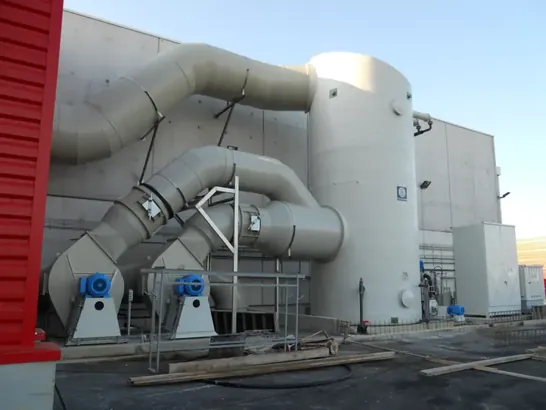
TECNIUM optimises the air capture strategy in the reception, pretreatment, fermentation, refining and maturation areas, including transversal and perforated ducting, in order to reduce the total air volume to be treated and maximise the efficiency of the system.
- Optimised capture in waste reception and pretreatment areas
- Extraction networks in fermentation and maturation halls
- Transversal and perforated ducting to reduce air volume
- Specific technologies tailored to the pollutants in each area
- Biogas desulphurisation before energy recovery
- Stripping of contaminated leachate before discharge
Turnkey projects for odour removal
TECNIUM offers a comprehensive service that ranges from the study of emission sources and the optimisation of air flow rates to the design, manufacture, installation and commissioning of odour treatment systems.
For odour treatment we apply specific technologies adapted to the pollutants present in each area of the plant. Our experience with more than 20 references enables us to size the systems with maximum accuracy, matching the technology to the pollutant profile of each installation.
Three areas of action in MSW / MBT plants
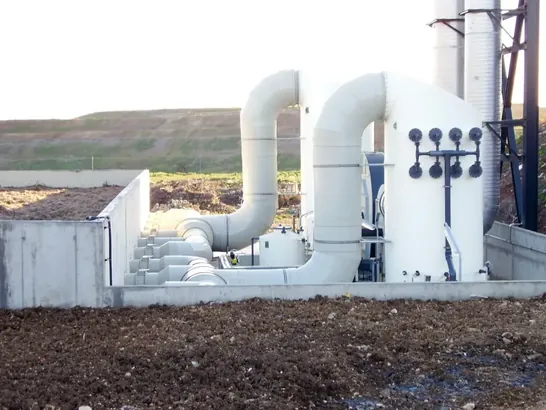
TECNIUM addresses the three main emission sources in urban waste treatment plants.
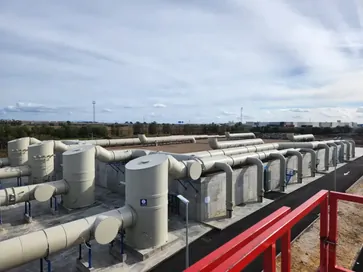
Odour removal in MSW plants
Turnkey projects including the design and supply of air capture networks, chemical scrubbing towers and organic and inorganic biofilters. Optimised capture in the reception, pretreatment, fermentation, refining and maturation areas.
View TECNIUM-BIO biofiltration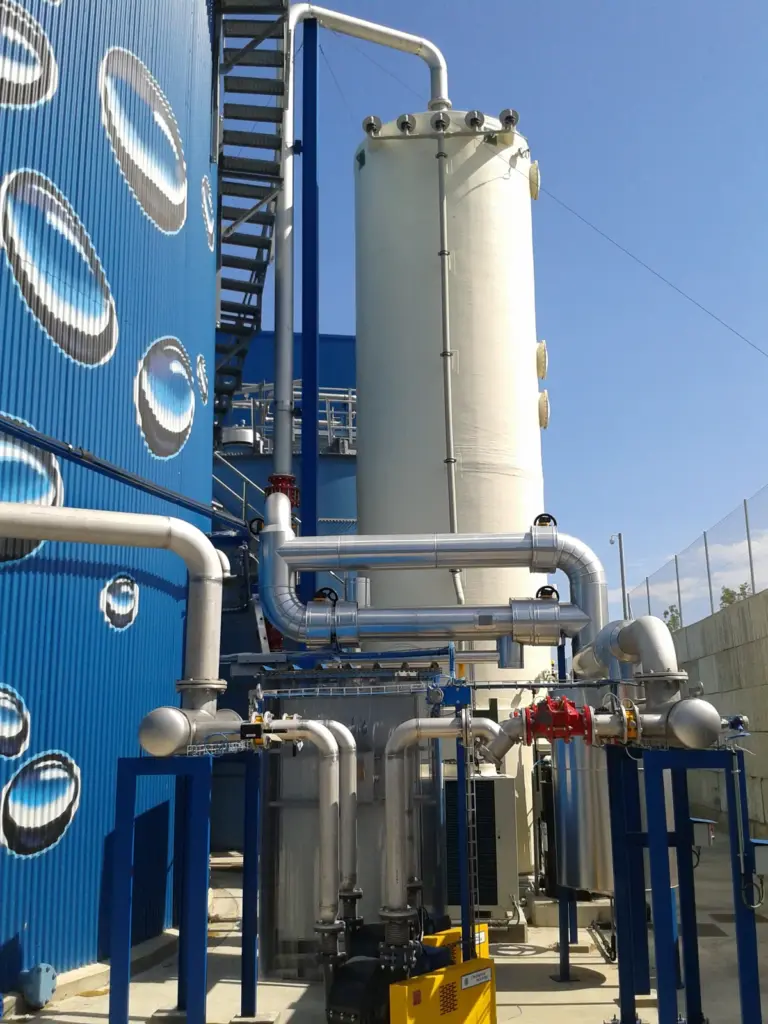
Biogas desulphurisation
The H₂S present in biogas must be removed before sending the gas to the cogeneration engines, in order to prevent corrosion problems. TECNIUM applies chemical and biological absorption technologies to eliminate hydrogen sulphide from biogas.
Explore solutions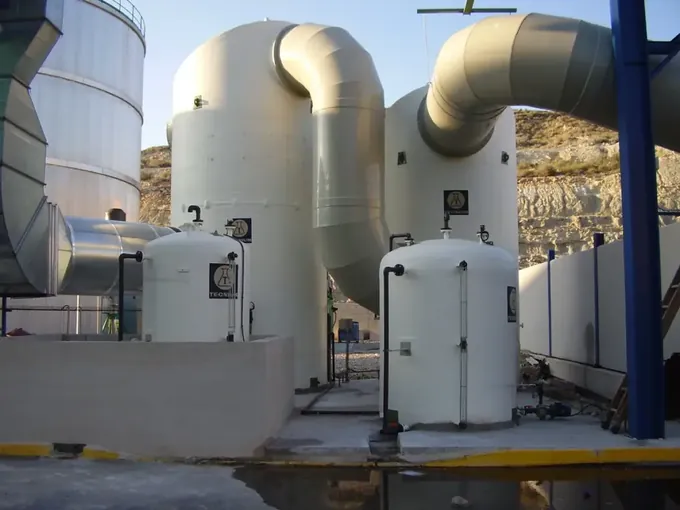
Leachate stripping
Leachate from waste plants is contaminated with organic and inorganic compounds such as NH₃, CO₂ and VOCs. This water must be treated by stripping before being discharged. TECNIUM has the necessary degassing technology for this purpose.
Explore TECNIUM-DEGASTypical emissions in waste plants
Our systems are designed to treat the pollutants and odorous compounds present in the different areas of an MSW / MBT plant.
Gas scrubbing technologies for MSW plants
For odour treatment in waste plants, TECNIUM applies specific technologies adapted to the pollutants found in each area.
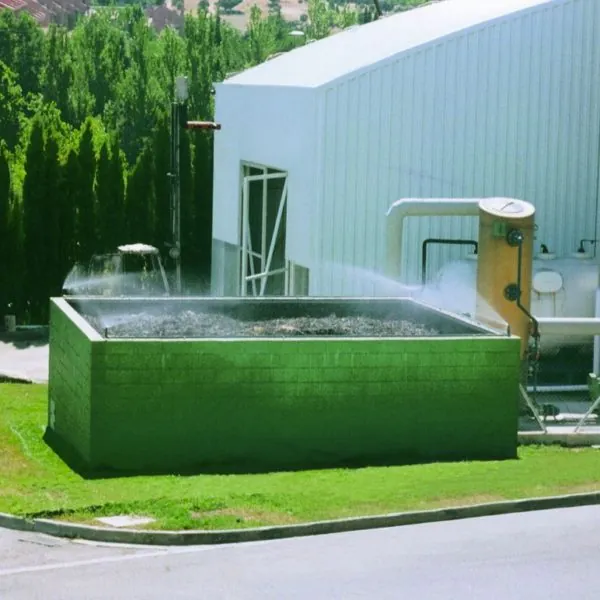
TECNIUM-BIO
The use of environmentally clean technologies has driven our R&D lines over recent decades. Gas scrubbing and odour removal systems using organic and inorganic biofilters.
View details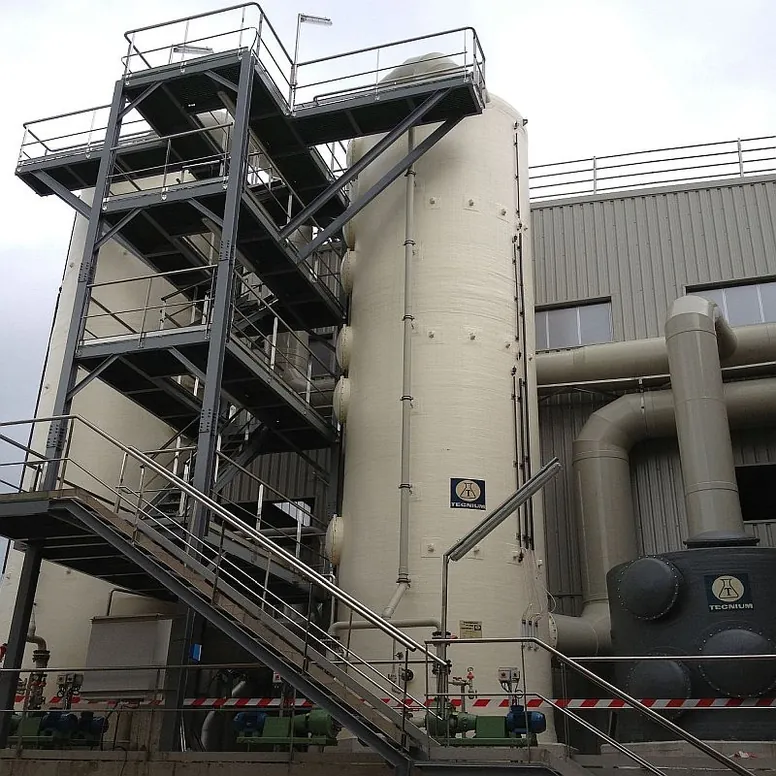
TECNIUM BIO-TR
The high efficiency of the BIO-TR allows chemical-route installations to be retrofitted, eliminating the consumption of chemical reagents and therefore the need for chemical storage and the periodic APQ inspections associated with it.
View details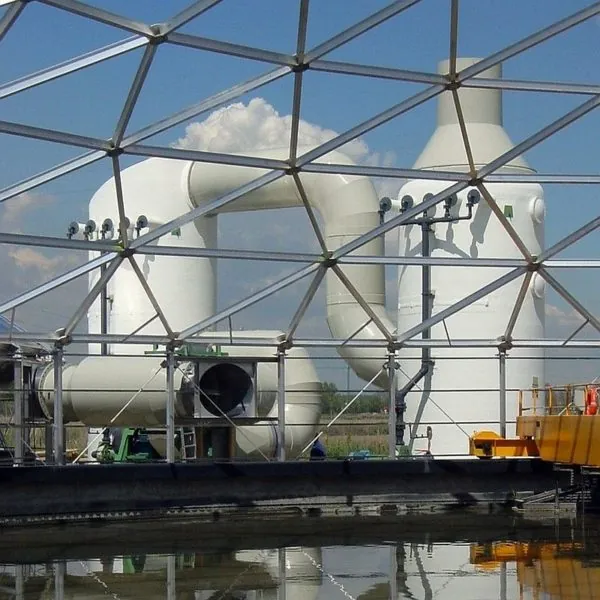
TECNIUM-CHEM
TECNIUM supplies multiple systems for gas scrubbing and odour control through absorption with water or chemical reagents, using scrubbing towers, venturis and cyclones.
View details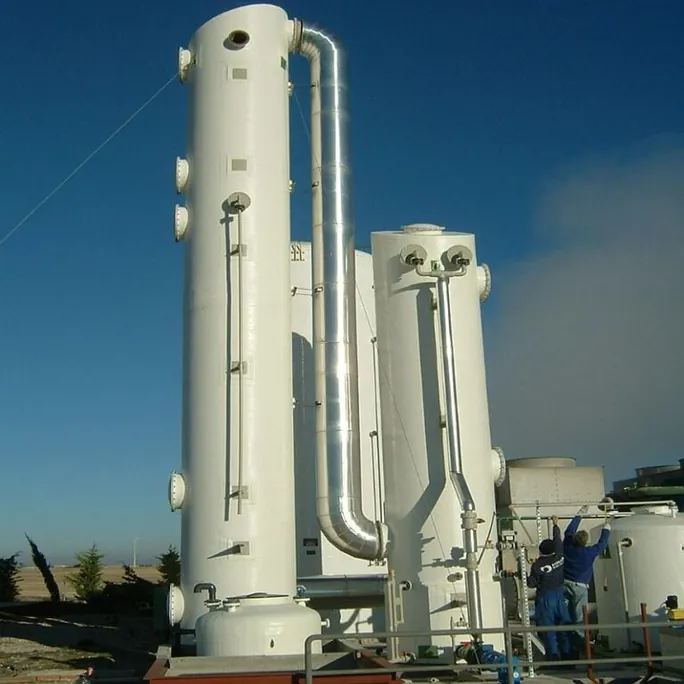
TECNIUM-DEGAS
Groundwater, well water, landfill leachate, manure and ultrafiltered water may contain dissolved gases that need to be removed before further treatment or discharge.
View detailsPlant zones where we operate
Our solutions integrate into the various areas of a municipal waste treatment plant where odorous emissions are generated.
Reception area
Capture and treatment of the odours generated in discharge pits and waste reception halls, where emission concentrations are particularly intense.
Pretreatment
Air extraction in the sorting, shredding and mechanical separation areas, with optimised ducting to minimise the air volume to be treated.
Fermentation and digestion
Control of emissions generated in fermentation tunnels, anaerobic digesters and composting areas, where H₂S, NH₃ and VOC production is at its highest.
Refining and maturation
Treatment of the air in compost refining and maturation halls, where odours persist for weeks and require effective, continuous capture.
Biogas and cogeneration
Desulphurisation of the biogas generated by anaerobic digestion before energy recovery in cogeneration engines, removing H₂S to prevent corrosion damage.
Leachate management
Degassing and stripping of leachate contaminated with NH₃, CO₂ and VOCs using TECNIUM-DEGAS aeration towers, preparing the water for discharge or further treatment.
The advantages of working with TECNIUM in MSW plants
More than 20 references in municipal waste plants back our experience in odour control.
Turnkey projects
From the emissions study and flow optimisation through to manufacturing, installation and commissioning of the treatment systems.
Flow optimisation
Design of capture networks with transversal and perforated ducting to reduce the total air volume to be treated, minimising energy costs.
20+ MSW references
More than 20 municipal waste plants with TECNIUM systems installed, handling treatment flows of up to 550,000 m³/h.
Tailored technologies
Selection of the optimal technology (biofiltration, biotrickling, chemical absorption, stripping) according to the pollutant profile of each area of the plant.
Over 70 years of experience
Founded in 1957 in Manresa, Barcelona. Decades of accumulated know-how in gas treatment and industrial odour control.
18,000 m² manufacturing
Vertically integrated production with in-house engineering, machining, plastic welding, assembly and quality control in our own facility.
Common questions about odour control in MSW plants
TECNIUM applies four main technologies for odour control in MSW / MBT plants: conventional biofiltration (TECNIUM-BIO) with organic and inorganic media, biotrickling percolating filters (TECNIUM BIO-TR) for high loads, chemical absorption (TECNIUM-CHEM) with scrubbing towers for acid and alkaline gases, and degassing / stripping (TECNIUM-DEGAS) for leachate treatment. The optimal technology is selected according to the pollutant profile of each area of the plant.
TECNIUM has executed projects with treatment flows of up to 550,000 m³/h in municipal solid waste plants. The sizing of the system depends on hall volumes, required air changes and the optimisation of the capture networks. TECNIUM designs transversal and perforated ducting to reduce the total air volume to be treated, which translates into lower investment and operating costs.
Yes. TECNIUM offers a complete service that includes the study and optimisation of the emission sources, the design of the air capture networks, the selection of the treatment technology, the manufacture of all equipment, transport, on-site installation and commissioning. This turnkey approach guarantees single-point responsibility and optimal performance of the system from day one.
The H₂S (hydrogen sulphide) in biogas must be removed before sending it to cogeneration engines, since it causes severe corrosion in mechanical components. TECNIUM applies chemical and biological absorption technologies to remove H₂S from biogas, adapting the system to the biogas flow rate, the H₂S concentration and the requirements of the cogeneration engine.
Leachate is the water generated by liquid percolation through the waste. In MSW / MBT plants, this leachate is contaminated with dissolved organic and inorganic compounds such as ammonia (NH₃), carbon dioxide (CO₂) and volatile organic compounds (VOCs). This water must be treated by stripping (degassing) using TECNIUM-DEGAS aeration towers before it can be discharged or sent to further treatment.
The biotrickling percolating filter technology (TECNIUM BIO-TR) allows chemical-route installations to be converted, completely eliminating the consumption of chemical reagents and therefore the need to store chemical products and to carry out the associated periodic APQ inspections. This means a significant reduction in operating costs and logistical complexity, while maintaining high pollutant removal efficiency.
Do you need to control the odours in your waste plant?
Our engineering team will assess the emission sources of your plant and design the optimal odour capture and treatment solution.