
Direct Coupling Fans
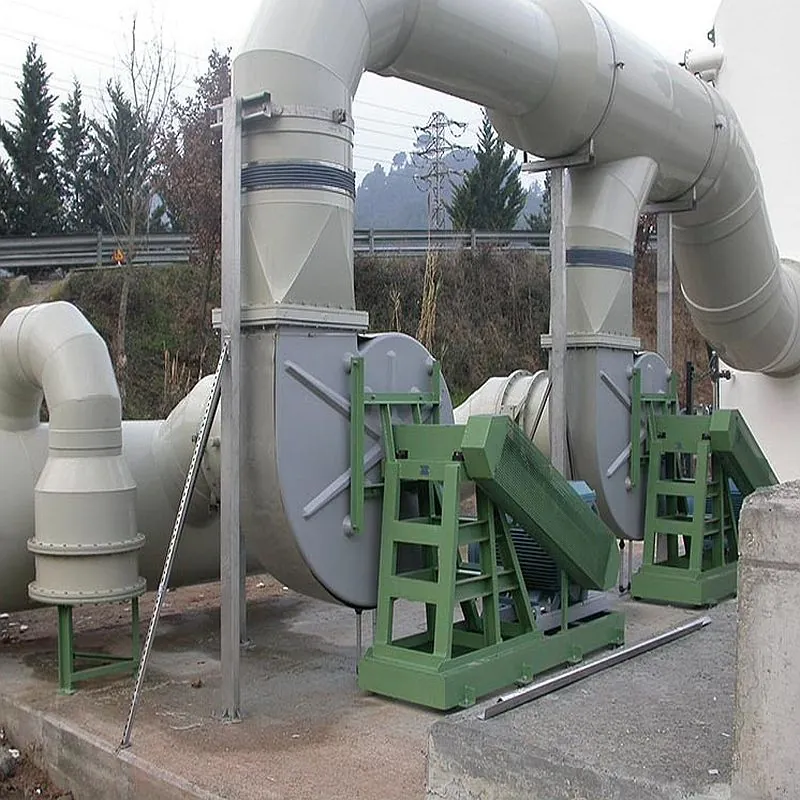
Range of corrosion-resistant plastic fans for low and medium pressure. The direct coupling to the motor shaft eliminates the belt transmission, reducing maintenance, mechanical losses and the equipment footprint.
Flow rates up to 40,000 m³/h and pressures up to 4,500 Pa.
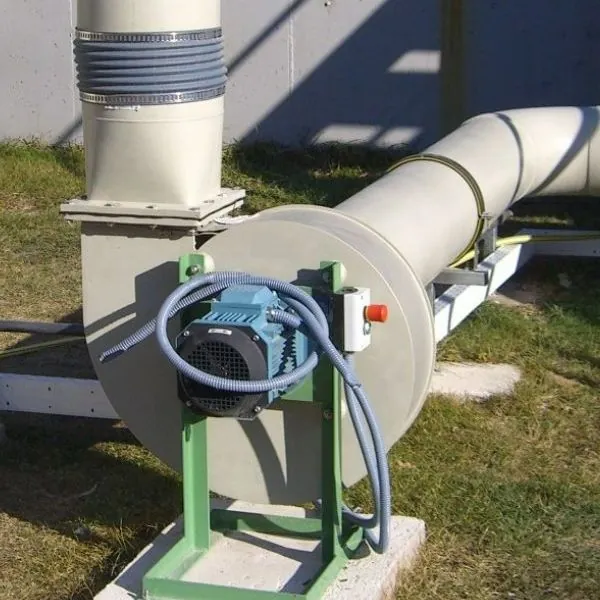
HS / MS series with base plate and directly coupled motor
The HS/MS series is built with a metallic base plate and motor coupled directly to the impeller, without belt transmission. The result: a more compact equipment with less maintenance and greater mechanical efficiency.
- Flow rates up to 40,000 m³/h
- Pressures up to 4,500 Pa
- Built in solid thermoplastic or FRP according to the gas being treated
- Mechanical torque transmitted to the impeller via metallic key and large-surface steel hub
- Integrated base plate with motor; no belt transmission
Performance and configuration
| Series | HS / MS with directly coupled motor |
|---|---|
| Maximum flow rate | Up to 40,000 m³/h |
| Maximum pressure | Up to 4,500 Pa |
| Construction | Solid thermoplastic or FRP |
| Transmission | Direct (no belts) + metallic key |
Four configurations to match the service
Seal selected according to the gas being handled, temperature and tightness requirements.
Sealing ring
Standard services
Leak reducer
Additional leak reduction
Mechanical seal
Toxic or hazardous gases
Automatic gasket
Reinforced tightness
Anticorrosive thermoplastics and composites
The casing and impeller are manufactured in solid thermoplastic or fibreglass-reinforced polyester depending on the contaminant matrix and gas temperature.
FAQs on direct coupling fans
The most common queries about direct transmission, seal selection and comparison with the pulley series.
When should I choose direct coupling over pulley and belt?
Direct coupling is the optimal choice when the required performance (flow rate and pressure) falls within the limits of the HS/MS series (40,000 m³/h and 4,500 Pa), because it offers lower maintenance (no belts to replace), lower mechanical losses, a more compact equipment and lower long-term operating cost. If you need higher flow or pressure, or if process conditions are going to change and you need speed flexibility, choose the MP/MM pulley series.
What are the differences between the HS and MS series?
Both share the directly coupled motor design but differ in size, hydraulic profile and motor power. TECNIUM selects the exact version based on the operating point and the customer’s installation constraints.
Which sealing system should I choose for the gas being treated?
The R ring covers general corrosive services. The S adds additional leak reduction. The C mechanical seal is the choice when handling toxic or hazardous gases, or when any leak is unacceptable. The E automatic gasket provides reinforced tightness in applications with more demanding pressures.
Which material is the most suitable?
PP covers most industrial corrosive gases (HCl, alkalis, brines, etc.) at moderate temperature. PVDF provides resistance to strong oxidisers and higher temperatures. FRP is used in large formats requiring structural stiffness. PVC is the economical option for low-temperature processes with a good chemical-resistance-to-cost ratio. TECNIUM defines the optimum material based on the gas analysis.
Does it require periodic maintenance?
Yes, but significantly less than the pulley series: with no belts, there is no periodic inspection of tension and wear. Maintenance is reduced to visual inspection of the impeller and casing, motor bearing verification according to the manufacturer’s instructions, and periodic cleaning when dust or particles are present in the treated gas.
Available in ATEX version?
Yes. The HS/MS series supports ATEX certified configurations under Directive 2014/34/EU: ATEX motor, antistatic materials in impeller and casing, and earthing appropriate to the required protection level. This is the standard configuration in plants with flammable solvents, biogas or classified zones.
Send us your details and we will advise you
We will help you size the optimum HS/MS fan for your gas, flow rate and pressure, and to decide whether the direct option is the best choice compared with pulley transmission.
- Size and material selection according to the gas
- Sealing configuration adapted to the service
- ATEX versions available
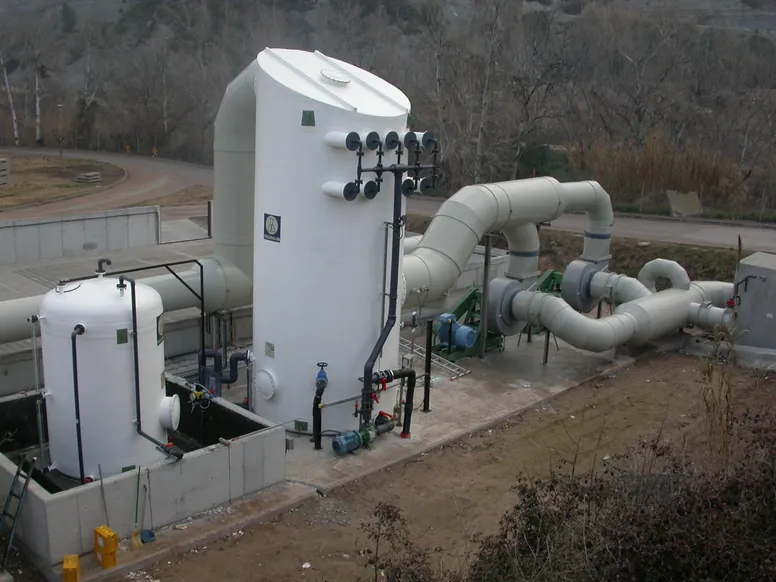
- Integration with scrubbing towers and biofilters
Request information
Complete the form and our technical team will contact you.
Explore our full range of fans
Discover TECNIUM plastic fans with direct or pulley coupling for any flow rate and pressure.