FRP tanks: types, advantages and applications
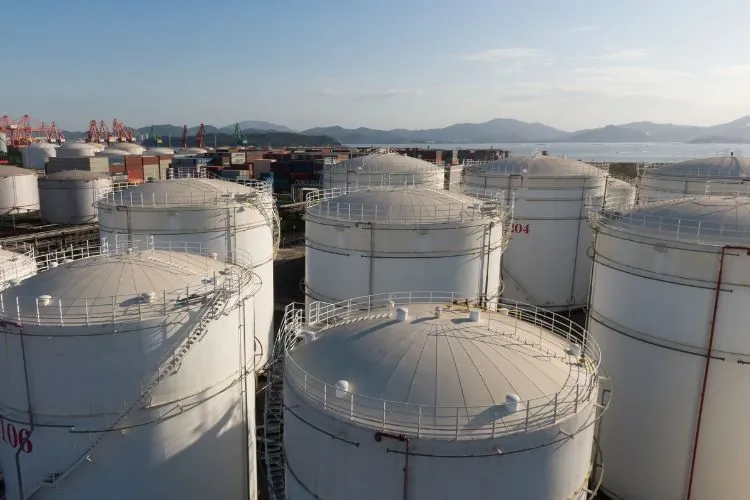
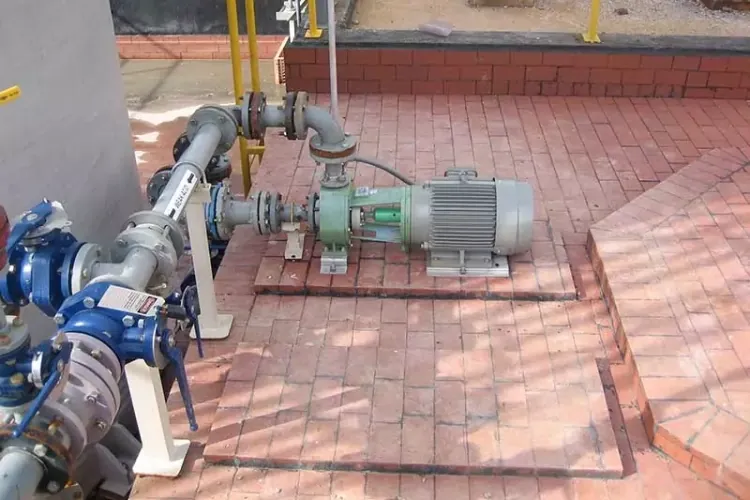
Storing corrosive chemicals safely and cost-effectively is a challenge that conventional metallic vessels struggle to meet. Fibre-reinforced plastic (FRP) — also known as GRP in UK engineering — combines exceptional chemical resistance with mechanical rigidity comparable to steel, at a fraction of the weight and with virtually zero corrosion-related maintenance.
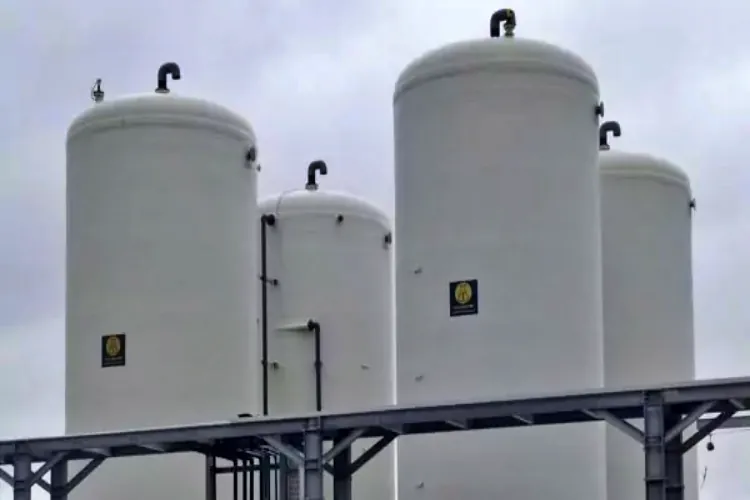
Storing corrosive chemicals safely and cost-effectively is a challenge that conventional metallic vessels struggle to meet. Carbon steel corrodes within months when exposed to strong acids, stainless steel suffers chloride-induced pitting that progresses invisibly, and the maintenance burden of lined or coated tanks erodes any initial cost saving within a few years.
Fibre-reinforced plastic (FRP) — also known as GRP (glass-reinforced polyester) in UK engineering practice — resolves these problems by combining exceptional chemical resistance with mechanical rigidity comparable to steel, at a fraction of the weight and with virtually zero corrosion-related maintenance.
For any UK facility operating under COMAH, DSEAR and Environmental Permitting Regulations, the choice of chemical storage vessel is not just an engineering decision: it is a compliance obligation that directly affects HSE inspection outcomes, Environment Agency (EA) permitting and the operator’s duty of care under the Environmental Damage Regulations 2015.
Tecnium has been designing and manufacturing corrosion-resistant FRP and thermoplastic vessels since 1957, with capacities from 500 to 200,000 litres, design pressures up to 6 bar and vacuum ratings to 750 Torr. All vessels are engineered to internationally recognised standards including BS 4994 — the UK-originated benchmark for GRP vessel design — EN 13121, AD Merkblatt and ASME RTP-1. This guide explains what FRP is, why it outperforms alternative materials, what tank configurations are available and how to specify the right vessel for your application.
What is an FRP tank and why does it outperform steel in chemical service
Composition and manufacturing process of FRP vessels
FRP (fibre-reinforced plastic) is a composite material consisting of a thermoset resin matrix reinforced with glass fibre. This combination delivers the best properties of each constituent: the resin provides the chemical barrier against the stored product, while the glass fibre supplies the structural rigidity needed to withstand internal pressure, vacuum and static loads.
Tecnium uses two families of resin in its vessel construction, selected according to the aggressiveness of the chemical to be contained:
- Bisphenolic and vinyl ester resins: extremely high chemical resistance. Applied as the inner chemical barrier (corrosion liner) in direct contact with the stored fluid. These are the resins of choice for concentrated acids, hypochlorites, oxidising mixtures and particularly aggressive products.
- Orthophthalic polyester resins: cross-linked with styrene and reinforced with glass fibre. These form the structural shell of the vessel, providing the mechanical strength required to withstand design pressure, vacuum and service loads.
Tecnium’s manufacturing process combines two complementary techniques: hand lay-up of the chemical barrier, which ensures precise control of thickness and resin distribution in the layer contacting the product, and filament winding of the structural shell, which deposits glass fibre rovings impregnated with resin at machine-controlled orientation and tension.
Tecnium also applies a triple copolymerisation catalysis system that eliminates residual styrene and maximises the mechanical performance of the finished laminate.
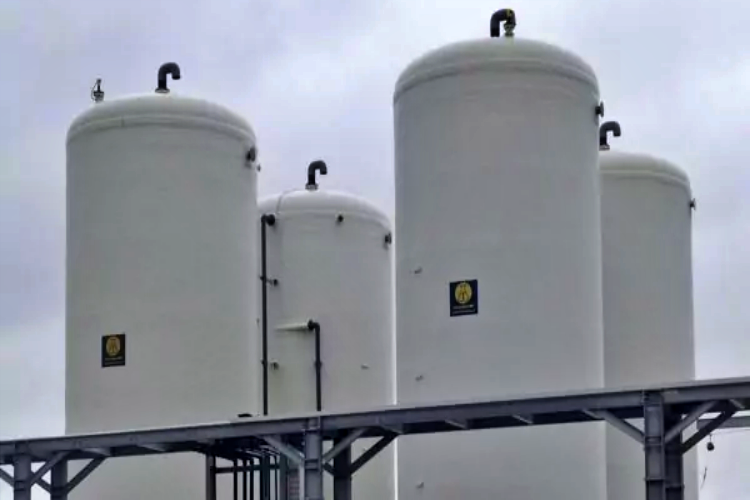
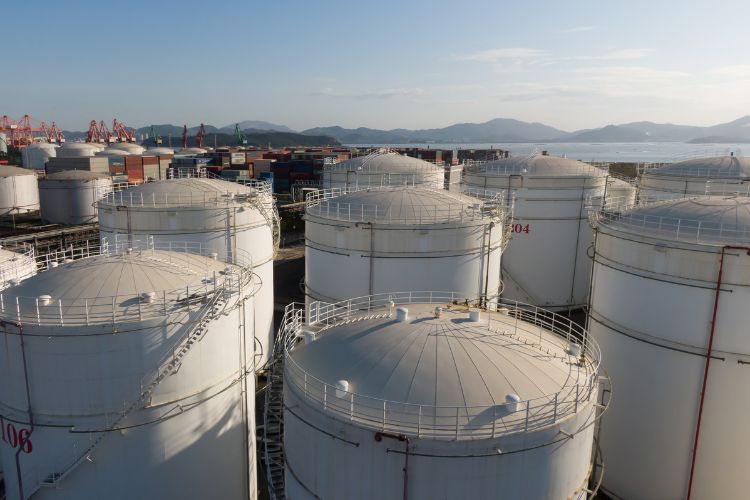
Every vessel undergoes non-destructive testing (hydrostatic test, weld inspection, surface cure, hardness) and destructive testing on sample coupons (tensile, flexural, resin-to-glass ratio, chemical resistance), ensuring the quality and reliability of each unit manufactured.
Advantages of FRP compared with steel, stainless steel and solid thermoplastics
The choice of construction material for a chemical storage vessel has a direct impact on total cost of ownership (TCO), installation safety and equipment service life. FRP delivers a combination of properties that no single alternative material can match. The following table summarises the key differences:
| Criterion | FRP / GRP | Carbon steel | 316 stainless | Solid PP |
|---|---|---|---|---|
| Chemical resistance | Excellent (acids, alkalis, solvents) | Poor (rapid corrosion) | Good (not chlorides) | Good (acids and salts) |
| Max. service temp. | Up to 120 °C | High (>400 °C) | High (>400 °C) | Up to 90 °C |
| Mechanical strength | High (glass fibre) | Very high | Very high | Medium–low |
| Weight (vs steel) | 70–80% lighter | Reference | Similar to steel | 80–85% lighter |
| Capital cost | Medium | Low | High | Medium–low |
| Maintenance cost | Very low | High (coatings, repairs) | Medium | Low |
| Expected service life | 25–30+ years | 5–15 years | 10–20 years | 15–20 years |
| Max. single capacity | 200,000 litres | No practical limit | No practical limit | Limited by rigidity |
FRP excels particularly in the medium-to-large capacity range (5,000 to 200,000 litres) where lined or coated steel tanks become uneconomic within a few years and solid thermoplastics lack the structural rigidity needed for larger diameters. Additionally, FRP can be repaired in situ by re-laminating — something impossible with a damaged stainless steel vessel.
UK regulatory framework: BS 4994, EN 13121 and environmental compliance
The United Kingdom has a particularly strong heritage in FRP vessel engineering. BS 4994 originated in the UK and has served as the global reference standard for the design and construction of GRP vessels for decades. Although formally superseded by EN 13121-3 across Europe, BS 4994 remains widely referenced in UK specifications and is still the standard that most UK engineers instinctively cite when specifying FRP vessels.
Tecnium designs and calculates its FRP vessels to the most demanding international standards relevant to the UK market:
- BS 4994 / EN 13121-3: the primary standard for FRP vessels. Defines requirements for design, materials, manufacture, testing and inspection. BS 4994 remains the de facto reference in many UK specifications.
- COMAH Regulations: any establishment storing listed hazardous substances above threshold quantities must comply with the Control of Major Accident Hazards Regulations. FRP vessels holding acids, alkalis or oxidisers on COMAH sites require full documentation and safety case integration.
- DSEAR: the Dangerous Substances and Explosive Atmospheres Regulations apply to the storage of substances classified as corrosive to metals. Since 2015, DSEAR’s scope has expanded to cover corrosive liquids, making FRP vessel selection and secondary containment design directly relevant.
- Environmental Permitting Regulations: the Environment Agency (EA) in England and SEPA in Scotland mandate secondary containment (bunding) for chemical storage. Groundwater regulations require that stored chemicals cannot reach controlled waters. FRP’s inherent corrosion resistance supports compliance with these requirements.
Tecnium provides full technical documentation for UK projects: design calculations per BS 4994 or EN 13121, fabrication drawings, material certificates, test reports and a complete quality dossier to support COMAH safety cases, EA permit applications and HSE inspection requirements.
Tecnium FRP tank configurations and selection criteria
Tank models: vertical, horizontal, underground and rectangular
Tecnium manufactures a comprehensive range of FRP vessels covering virtually all industrial chemical storage requirements. Each geometric configuration addresses specific space, installation and operational constraints. The following table summarises the available models:
| Code | Type | Configuration | Capacity | Typical application |
|---|---|---|---|---|
| DPO | Vertical flat bottom | Open top | 500 – 200,000 L | Atmospheric storage. Bund tanks, decanters, neutralisation vessels. |
| DPT | Vertical flat bottom | With lid | 500 – 200,000 L | Acid and volatile product storage. Vented to scrubber or atmosphere. |
| DPF / DPG | Vertical flat bottom | Conical / domed roof | 5,000 – 200,000 L | Large-volume storage with low internal pressure. WwTW, chemical plants. |
| DIS / DIM | Vertical dished ends | Hemispherical / conical bottom | 500 – 100,000 L | Pressure or vacuum vessels. Reactors, mixers, crystallisers. |
| DOZ / DOM | Vertical conical base | Conical discharge | 500 – 50,000 L | Gravity discharge. Settling tanks, solids hoppers. |
| DCS / DCH / DCP | Horizontal | Cylindrical with dished ends | 500 – 200,000 L | Underground installation, transport, height-restricted sites. |
| DRO | Rectangular | Open or lidded | Bespoke | Pickling baths, containment bunds, electroplating tanks. |
Beyond standard models, Tecnium manufactures bespoke vessels to customer drawings, adapting geometry, nozzle positions, structural reinforcements and accessories to the specific requirements of each project. This bespoke capability is particularly valued by engineering consultancies designing chemical plants, wastewater treatment works and surface treatment facilities across the UK.
Construction materials: resins and thermoplastics available
Selecting the right construction material for an FRP vessel depends primarily on the stored chemical, its concentration and the service temperature. Tecnium works with two broad material families that can be combined:
Thermoset resins (the FRP/GRP basis):
- Bisphenolic and vinyl ester resins: extremely high chemical resistance. Used as the inner corrosion liner for strong acids (HCl, H₂SO₄, HNO₃), hypochlorites, chlorinated solvents and oxidising mixtures. Service temperature up to 120 °C.
- Orthophthalic polyester resins: excellent mechanical strength. Used as the structural shell reinforced with glass fibre. Cross-linked with styrene for optimum rigidity.
Thermoplastics (inner liner or full construction):
- Polypropylene (PP): excellent acid and salt resistance. Weldable. Maximum 90 °C. The standard liner material for dual-laminate vessels (PP interior + FRP structural shell).
- PVDF: fluoropolymer with outstanding chemical resistance to 120 °C. Specified for concentrated acids at elevated temperatures and high-purity applications.
- PVC and C-PVC: good resistance to dilute acids and saline solutions. Cost-effective option for ambient temperature service.
- E-CTFE, FEP and PFA: premium fluoropolymers with maximum chemical and thermal resistance. Used as inner liners in the most demanding applications.
A widely specified construction approach in Tecnium vessels is the dual-laminate: thermoplastic inner liner (PP, PVDF or PVC) with an FRP structural outer shell. This delivers the best of both worlds: the chemical resistance of the thermoplastic in contact with the product and the mechanical strength of the glass-reinforced polyester as the load-bearing structure.
How to specify an FRP tank: capacity, pressure, temperature and product
Correctly specifying an FRP vessel requires the simultaneous evaluation of several process and installation parameters. An incomplete specification can result in an oversized vessel (higher cost and footprint) or an undersized one (unable to meet service conditions). The key criteria are:
- Storage volume: Tecnium covers capacities from 500 litres to 200,000 litres in a single vessel. For larger requirements, tank farms (multiple vessels in parallel) with shared instrumentation and bunding are the standard approach.
- Design pressure: Tecnium vessels handle pressures up to 6 bar and vacuum to 750 Torr. Atmospheric tanks (DPO, DPT) operate at ambient pressure; dished-end vessels (DIS, DIM) are designed as pressure vessels to BS 4994 or EN 13121.
- Service temperature: determines resin selection and whether a thermoplastic liner is needed. Vinyl ester resins withstand up to 120 °C; standard orthophthalic resins to 80–90 °C.
- Stored product: its chemical nature, concentration and temperature define the corrosion liner specification. For concentrated strong acids, vinyl ester or PVDF liners are specified; for dilute acids and salts, bisphenolic resins or PP liners suffice.
- Installation location: indoor, outdoor, underground or within a bund. Horizontal models (DCS, DCH, DCP) are the preferred configuration for buried service. Outdoor installation may require UV stabilisation and wind loading reinforcements.
- Regulatory requirements: in the UK, COMAH and EA/SEPA permitting conditions dictate secondary containment, venting, instrumentation and safety distances that directly influence the overall installation design.
Industrial applications, accessories and frequently asked questions
UK industries that rely on FRP tanks
Tecnium FRP vessels are installed across a wide range of UK industrial sectors, each with specific requirements for stored products, volumes and operating conditions:
- Water and wastewater utilities: chemical dosing tanks for chlorine, acids, polymers and sodium hypochlorite at treatment works operated by Thames Water, United Utilities, Severn Trent and other UK utilities. FRP’s corrosion resistance is critical in the humid, aggressive environment of treatment plants.
- Pharmaceutical manufacturing: storage of reagent acids, solvents and high-purity chemicals in GMP-controlled environments. The UK’s pharmaceutical sector demands vessels with full traceability, certified materials and validated cleaning procedures.
- Chemical processing: bulk storage of acids (HCl, H₂SO₄, HNO₃), alkalis (NaOH, KOH), sodium hypochlorite and solvents at chemical clusters such as Teesside, Humber and Grangemouth. FRP is the standard material for reagent tank farms.
- Steel and surface treatment: pickling baths, acid storage, rinsing tanks and electroplating vessels. Rectangular DRO vessels are widely used as immersion baths in metal finishing lines.
- Oil and gas: chemical storage for North Sea platform operations, onshore processing facilities and decommissioning projects. DSEAR-compliant FRP vessels with full COMAH documentation are essential in this sector.
- Mining and minerals: acid leaching tanks, drainage treatment vessels and reagent storage for flotation circuits. FRP’s abrasion resistance with appropriate resin selection is critical for slurry-containing applications.
- Food and beverage: CIP chemical storage, acid dosing and sanitisation reagent tanks. BRC and HACCP compliance requirements apply.
Frequently asked questions about FRP tanks
What is the maximum capacity of a single FRP tank?
Tecnium manufactures single-unit FRP vessels with capacities from 500 litres up to 200,000 litres (200 m³). For requirements exceeding this, the standard solution is a tank farm: multiple vessels in parallel sharing instrumentation, bunding and loading/offloading pipework.
What service life can be expected from an FRP vessel?
With correct resin specification and proper installation, a Tecnium FRP vessel can achieve a service life of 25 to 30 years or more — significantly longer than metallic vessels in corrosive chemical service. Additionally, FRP can be repaired in situ by re-laminating, which can extend service life further if localised damage is detected during routine inspection.
Do FRP tanks comply with BS 4994 and EN 13121?
Yes. Tecnium designs, manufactures and documents its FRP vessels in full compliance with BS 4994 and EN 13121. The deliverable documentation package includes design calculations, fabrication drawings, material certificates, test reports and a complete quality dossier suitable for COMAH safety case integration, EA permitting and HSE inspection.
What accessories are supplied with an industrial FRP tank?
Tecnium supplies FRP vessels with all accessories needed for a complete installation: corrosion-resistant level indicators (float, glass, magnetic, capacitive, radar, ultrasonic), level switches (capacitive, inductive, magnetic), pultruded polyester ladders and handrails, vent scrubbers, electric heaters, thermal insulation and heating coils. All accessories are manufactured from corrosion-resistant materials compatible with the stored product.
Can Tecnium manufacture bespoke FRP vessels?
Yes. In addition to its standard range, Tecnium manufactures bespoke vessels and equipment to customer drawings, adapting geometry, diameter, height, wall thickness, nozzle positions, reinforcements and accessories to the specific requirements of each project. Tecnium’s R&D department, working in collaboration with university research centres, performs all mechanical and chemical resistance calculations to ensure the safety and durability of every bespoke unit.
If you need an FRP vessel for your plant or facility, Tecnium’s technical team can help you select the optimum model, material and configuration for your process and storage conditions. Request a no-obligation quotation and receive personalised engineering support from a manufacturer with over 65 years’ experience in corrosion-resistant vessel construction.
How can we help you?
Tell us about your application and our technical team will help you specify the optimum solution for your process conditions.