Activated Carbon Adsorption: TECNIUM-CARB
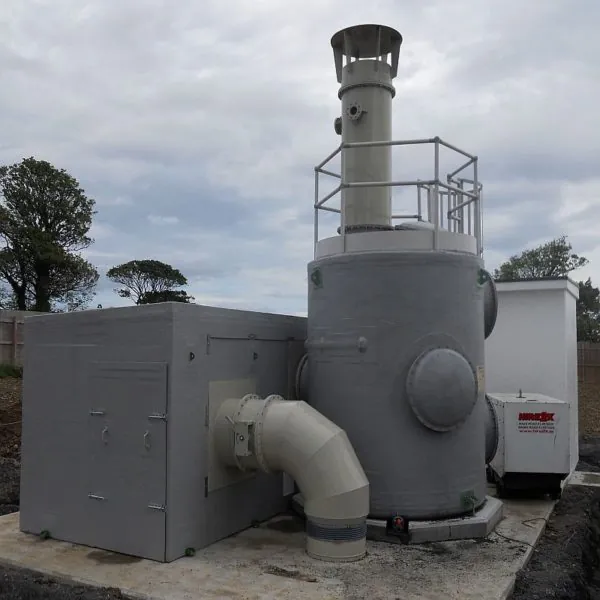
Gas scrubbing and odour removal processes through porous filter media. The range includes adsorption with activated carbons, impregnated or non-impregnated, catalytic, water-regenerable and thermally activated.
Porosity-driven adsorption for odours and trace compounds
In most cases, contaminants present in gases have very low perception thresholds (mercaptans, VOCs, H₂S, etc.) and granular carbon makes it possible to adsorb them and fix them onto its surface thanks to its porosity and to the attraction of intermolecular forces.
Correct carbon selection based on the contaminants present is essential, along with proper filter sizing, material choice and installation dimensions.
TECNIUM offers a comprehensive range of carbons (virgin, impregnated with KOH/KMnO₄/NaOH, catalytic, thermally activated or regenerable) and selects the optimal combination for each contaminant matrix, flow rate and target residual odour level.
Key advantages of the activated carbon filter
A widely proven technology, easy to operate and with a competitive deployment cost for medium-to-low flow rates.
Applications, types of carbon and operation
Applications
- WWTPs: pumping wells, thickeners, preliminary treatment and dewatering
- Food industry: roasting, cooking and fat treatment
- Chemical industry: VOCs, reactor venting and heavy metal removal
- Medium-to-low flows with demanding residual odour requirements
- Polishing stage after chemical or biological route
Types of carbon available
- Virgin: for VOCs and organic compounds
- Impregnated: KOH, KMnO₄ or NaOH for H₂S and acidic compounds
- Catalytic: in-situ oxidation with ambient O₂
- Water-regenerable: extended service life through washing
- Thermally activated: high specific capacity
Operation and maintenance
- Stable pressure drop throughout bed life
- Replacement by cartridge or by bed unload/reload
- Colorimetric indicators or continuous outlet probes
- Body in FRP, PP or painted steel according to environment
- Spent carbon management compliant with waste regulations
FAQs on TECNIUM-CARB adsorption
The most common queries on activated carbon filters, carbon type selection and differences with TECNIUM-K.
What is the difference between TECNIUM-CARB and TECNIUM-K?
TECNIUM-CARB works with activated carbon in its various forms (virgin, impregnated, catalytic, regenerable, thermally activated) in a homogeneous bed. TECNIUM-K combines carbon with impregnated zeolites and aluminas in a multilayer configuration to extend the contaminant spectrum and to operate with very high humidity. CARB is the most affordable CAPEX option; K offers higher capacity and tolerance to humidity close to saturation.
How is the right carbon selected for my process?
Selection starts with analysis of the gas to be treated: main contaminants, concentration, relative humidity, temperature and flow rate. For H₂S and acidic compounds, carbons impregnated with KOH or NaOH are used; for VOCs and organic compounds, virgin or thermally activated carbon; for complex low-concentration odours, catalytic carbons. TECNIUM sizes the filter (face velocity, contact time, saturation profile) to ensure the target service life.
How long does an activated carbon bed last?
Service life depends on the contaminant mass load and on humidity. In typical WWTP and odour control applications, design is for 12-24 months between replacements. Outlet probes detect exhaustion before contaminant breakthrough occurs, and the saturated carbon is replaced by new material in cartridges or through bed unload/reload.
Does it work with very humid gases?
Virgin activated carbon loses useful capacity at high relative humidity because water competes for adsorption sites. For saturated gases, TECNIUM recommends TECNIUM-K (aluminas + zeolites), gas pre-conditioning to reduce RH, or the use of thermally activated carbons specifically designed for high humidity.
Can activated carbon be regenerated?
Some carbons can be regenerated with hot water or steam (regenerable carbons), extending the bed service life by 2-3 cycles before final replacement. Others are thermally regenerated in specialised off-site kilns. Regeneration makes sense when savings in new carbon offset the cost of regeneration and logistics; TECNIUM evaluates this case by case.
What is done with spent carbon?
Spent carbon is managed as waste according to its classification, which depends on the adsorbed contaminant. In most odour control applications it is classified as non-hazardous waste and sent to energy recovery or to an authorised waste manager. When it has adsorbed heavy metals or specific chlorinated compounds, it is managed as hazardous waste in compliance with regulations.
Send us your details and we will advise you
We will help you select the carbon type and size the most suitable TECNIUM-CARB filter for your flow rate, contaminants and target residual odour level.
- Emission characterisation and carbon selection
- Turnkey filters with instrumentation
- Spare media and virgin carbon supply
- Global aftersales and waste management support
Request information
Complete the form and our technical team will get in touch with you.
Explore all our solutions
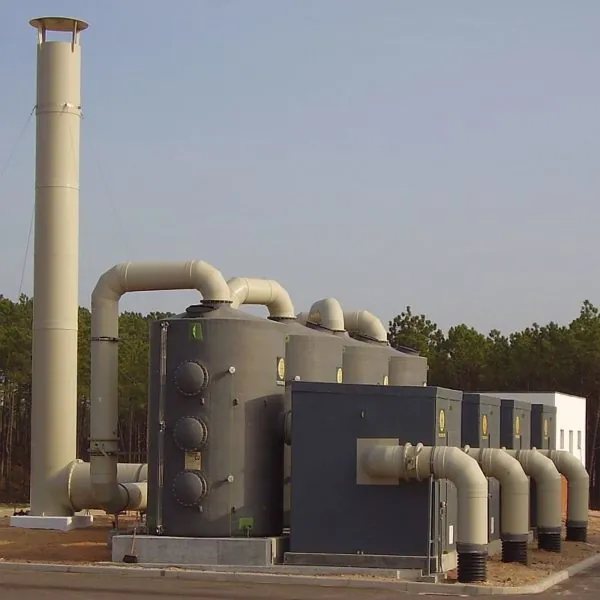
Discover the full range of TECNIUM products for the treatment of corrosive fluids and polluting gases.