Biotrickling: TECNIUM BIO-TR
The high efficiency of BIO-TR makes it possible to convert your chemical-route installation by eliminating the consumption of chemical reagents and, therefore, eliminating the storage of chemical products on your premises and periodic APQ inspections.
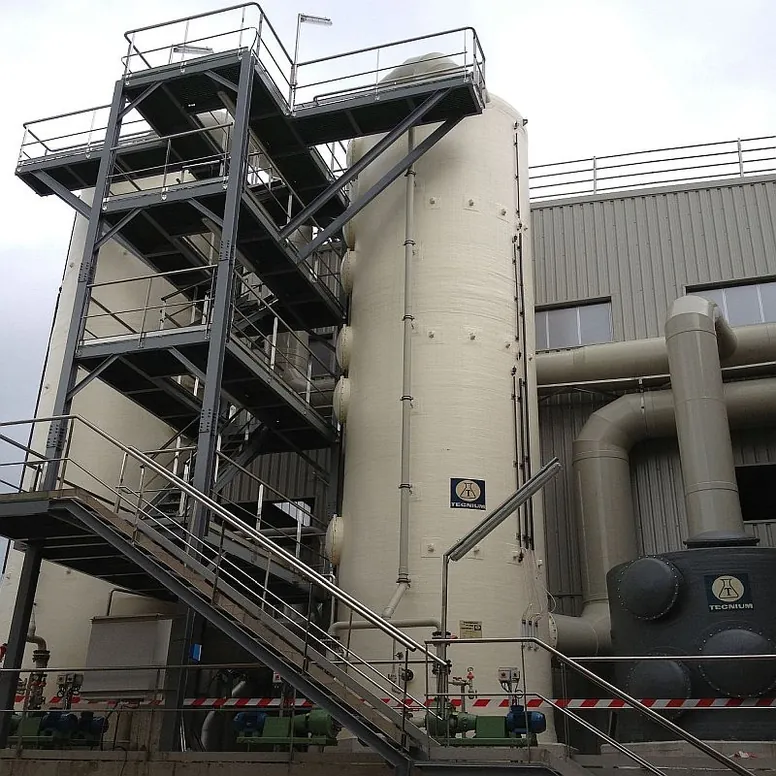
Biological removal of odours, VOCs and sulphur compounds
Traditional technologies applied to the removal of odours entail significant reagent consumption and problems with other compounds present, as well as the generation of effluents.
TECNIUM PROCESS has developed an innovative biological system that delivers high efficiency in the removal of these compounds with a minimum installation and operating cost.
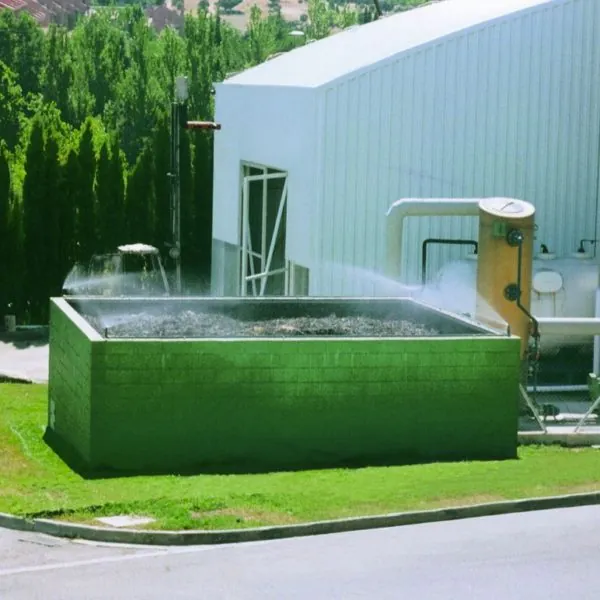
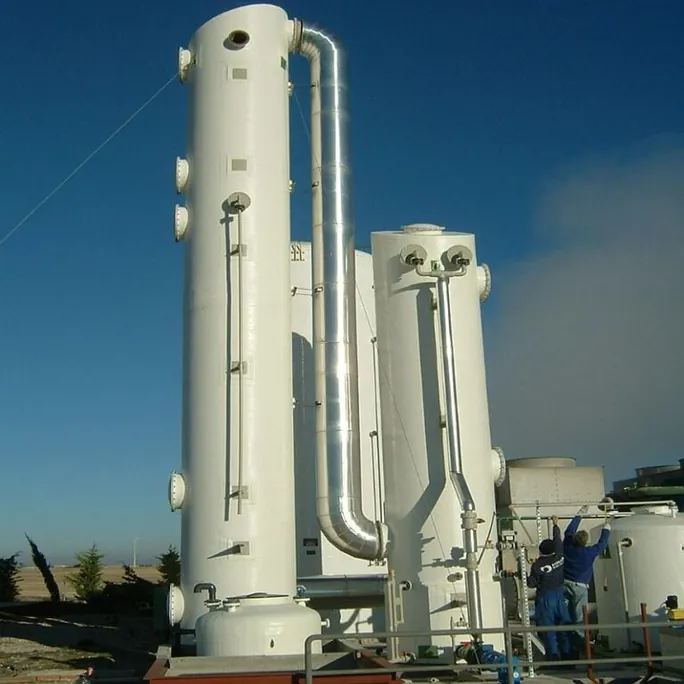
BIO-TR uses a long-lasting inorganic packing bed on which a biofilm of specialised microorganisms forms. The contaminated gas circulates through the packing while a recirculated liquid maintains humidity and provides nutrients, ensuring continuous and stable degradation of the contaminants.
Key advantages of the biological trickling filter
Ten reasons why BIO-TR outperforms conventional scrubbing towers in efficiency, operating cost and sustainability.
Process, applications and configuration
Process
- Gas pre-conditioning (humidity and temperature)
- Counter-current pass through the inorganic trickling bed
- Attached biofilm degrades H₂S, mercaptans and soluble VOCs
- Liquid recirculation with nutrient supply and pH control
- Controlled purge routed to the head of the wastewater plant
Applications
- Municipal and industrial WWTPs
- RSU, MBT and composting plants
- Chemical and pharmaceutical industries
- Farms, manure and digesters
- Pulp & paper and fertilizer industries
- Conversion of chemical-route scrubbers
Materials and configuration
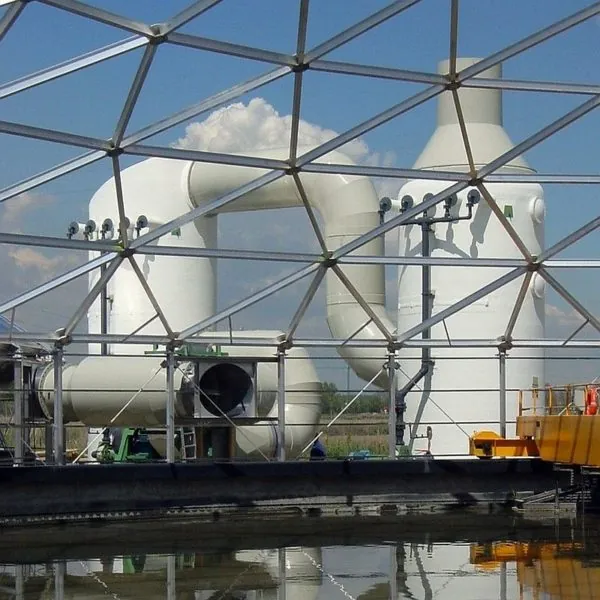
- Body in FRP, PP or HDPE depending on chemistry and temperature
- Structured or random inorganic packing with high specific surface
- Liquid distribution system with anti-clogging nozzles
- Integrated recirculation pump, tank and nutrient control
- pH, conductivity, flow and temperature instrumentation
FAQs on Biotrickling BIO-TR
The most common questions about TECNIUM biological gas scrubbing and how it compares with conventional chemical technologies.
How does biotrickling differ from a traditional biofilter?
A conventional biofilter uses organic packing (peat, compost, bark) that degrades over time and needs replacement. The BIO-TR biotrickling system uses long-lasting inorganic packing with continuous liquid recirculation, which allows pH, humidity and nutrients to be controlled with greater precision, maintains a higher gas flow per unit volume and delivers more stable removal rates against concentration variations.
Which contaminants does it remove most efficiently?
BIO-TR is especially efficient with soluble and biodegradable compounds: hydrogen sulphide (H₂S), mercaptans and other reduced sulphur compounds, ammonia (NH₃), amines and a wide range of soluble VOCs (alcohols, aldehydes, organic acids). For hydrophobic or poorly biodegradable compounds, it is designed in combination with other stages.
How much is operating cost reduced compared with a chemical tower?
By eliminating the continuous consumption of caustic, hypochlorite or sulphuric acid, the operating cost drops dramatically: reagent expenditure disappears, there is no APQ storage or related inspections, and the generation of saline effluents is reduced to an occasional purge that can be returned to the head of the wastewater plant. Electrical consumption is also lower thanks to its low pressure drop.
Is it possible to convert an existing scrubber into a BIO-TR?
Yes. TECNIUM designs conversions taking advantage of the existing chemical scrubber’s structure, fans and ducting. The packing and the chemical dosing system are replaced by an inorganic bed, the biological liquor recirculation circuit and the control instrumentation. Typical return on investment ranges between 12 and 36 months depending on the previous reagent consumption.
How long does the biomass take to stabilise?
Biological start-up usually takes between 2 and 6 weeks until nominal efficiency is achieved, depending on the target compound, the inlet concentration and the temperature. TECNIUM inoculates the system with selected strains and supports start-up with a monitoring protocol covering pH, nutrients and applied load until the biofilm is consolidated.
In which sectors is BIO-TR most widely deployed?
Municipal WWTPs (deodorisation of preliminary treatment, thickeners and dewatering), RSU/MBT plants, chemical and pharmaceutical industries, fertilizer manufacturing, pulp & paper (TRS control), farms and manure treatment plants, and biogas digesters as a polishing stage before energy recovery.
Send us your details and we will advise you
We will help you size the most suitable BIO-TR solution for your gas flow, your contaminant profile and the constraints of your plant.
- Feasibility study with no obligation
- Custom process design
- Conversion of existing scrubbers
- Start-up and global aftersales support
Request information
Complete the form and our technical team will get in touch with you.
Explore all our solutions
Discover the full range of TECNIUM products for the treatment of corrosive fluids and polluting gases.